
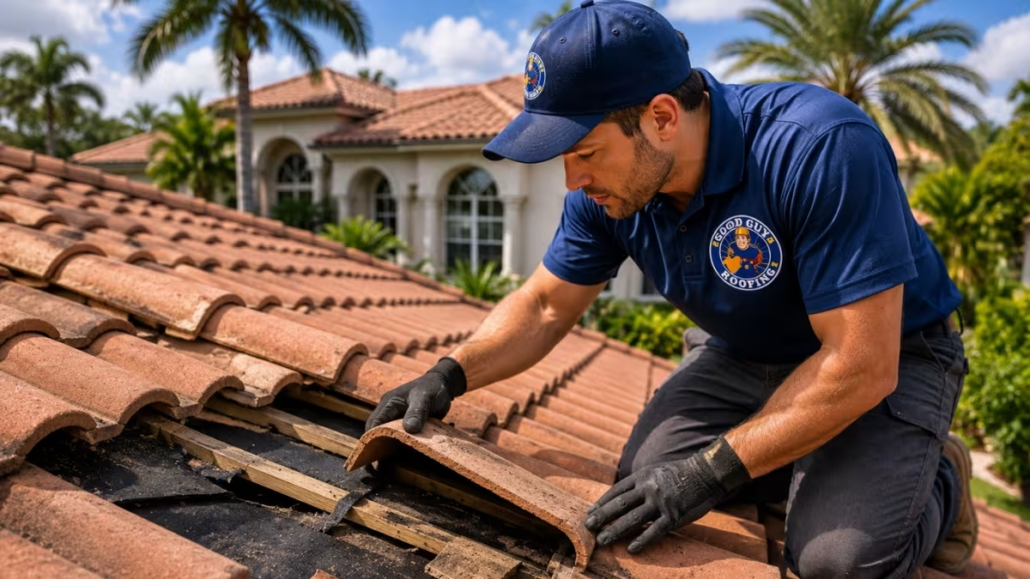
Tile Roof Repair Guide: Broken Tiles, Underlayment Leaks, and What Repairs Cost
Tile roofs are the defining feature of South Florida residential architecture, and for good reason. Concrete and clay tile handle UV, salt air, and hurricane-force wind better than almost any other residential roofing material available.
When a tile roof is working properly, it can last 40 to 50 years with relatively modest maintenance.
The problem is that “working properly” depends on more than the tiles themselves. A tile roof is a system – and the weakest component of that system isn’t the tile. It’s the underlayment beneath it.
This guide explains how tile roof repairs actually work, what causes tile roofs to leak even when the tiles look fine from the street, what common repairs cost in South Florida, and how to know when repair is the right call versus when a full underlayment replacement makes more sense.
How a Tile Roof System Actually Works
Understanding why tile roofs fail starts with understanding what a tile roof actually is – because most homeowners have a simplified mental model that misses the most important part.
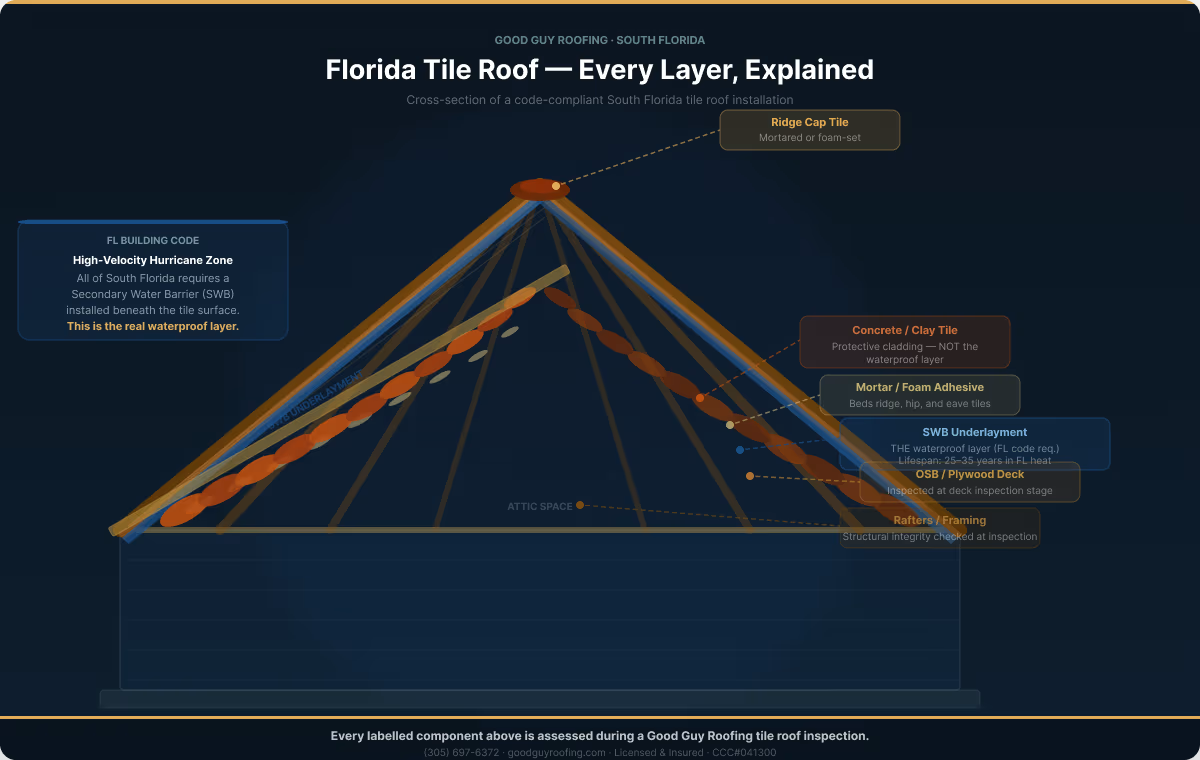
The tiles themselves, whether concrete S-tiles, flat concrete tiles, or clay barrel tiles – are not the waterproof layer. They are a protective cladding. Their job is to deflect rain, resist wind uplift, and shield the real waterproofing layer from UV and physical damage. But water that gets around or under a tile does not directly enter the house.
The waterproofing comes from the underlayment. It is a layer of modified bitumen or felt. It is installed on top of the roof decking, under the tiles. In Florida’s High-Velocity Hurricane Zone (which covers all of South Florida), the building code requires a Secondary Water Barrier (SWB) – a more robust underlayment system designed to keep water out even if the primary surface layer is damaged.
This distinction matters enormously for repair and diagnosis. When a tile roof leaks, the cause is almost never the tile itself. It’s one of the following:
- Failed underlayment: the SWB has dried out, cracked, or deteriorated to the point where it no longer sheds water effectively.
- Failed flashing: the metal sealing around chimneys, vent pipes, skylights, or wall junctions has lifted, corroded, or lost its sealant bond.
- Displaced or broken tile exposing the underlayment: the underlayment is exposed and, if also degraded, allows water through.
- Blocked valley drainage: debris accumulation in the valley between two roof slopes creates ponding that overwhelms even sound underlayment.
| The key insight for South Florida homeowners:
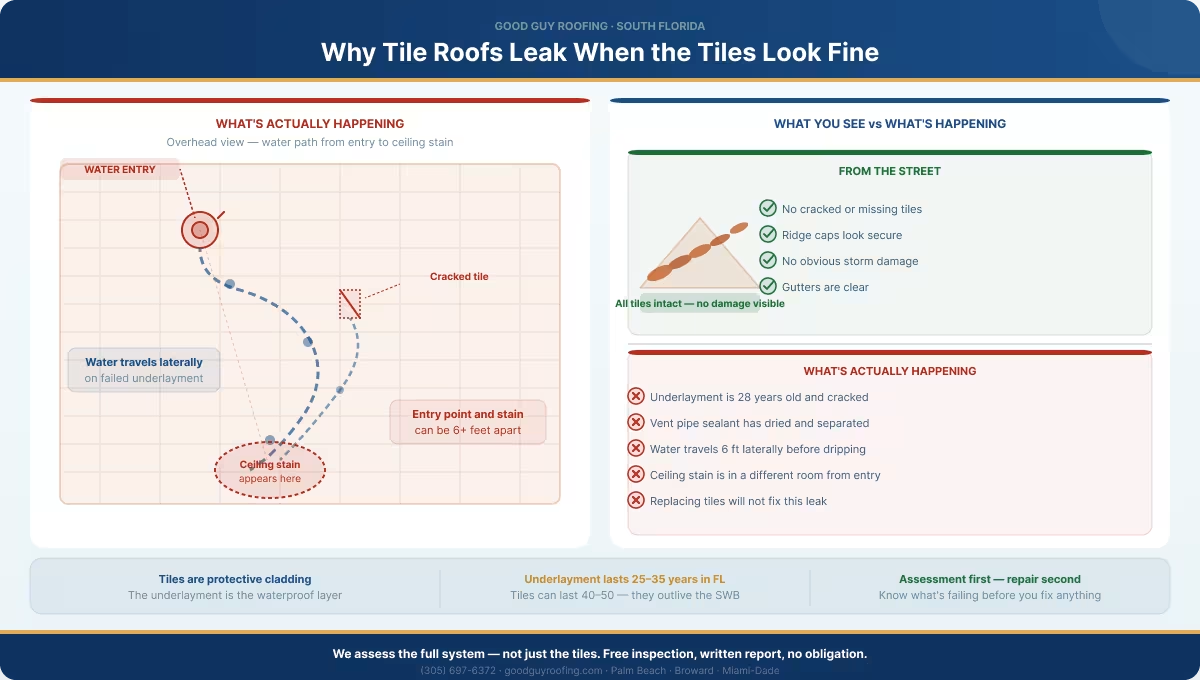
A tile roof with perfectly intact-looking tiles can still be leaking actively. If the underlayment beneath is 25 years old and has dried out from decades of Florida heat, water that gets under a single displaced tile – or through a microscopic crack in the sealant around a vent pipe – can travel laterally across the failed underlayment and come through the ceiling somewhere completely different from where it entered the roof. |
Common Tile Roof Problems in South Florida
Broken or Cracked Tiles
Tile breakage is the most visible tile roof problem, and the one most homeowners notice first. Concrete and clay tile can crack from:
- Impact – falling tree branches, hail (rare in South Florida but not unknown), or debris during a hurricane
- Thermal cycling – the daily expansion and contraction in Florida’s heat causes tiles at certain stress points to develop hairline cracks over the years
- Foot traffic – tile is surprisingly fragile underfoot, and a single misplaced step can crack a tile invisibly from above
- Manufacturing defects – less common, but present in some older production runs
A cracked tile that is still seated properly may not leak immediately – the underlayment beneath it may still be intact and functional. But it creates a vulnerability: the exposed tile. The exposed tile no longer deflects rain as designed. The crack widens as temperatures change. The extra load on the underlayment speeds up wear at that spot.
The practical implication: don’t ignore a cracked tile “because it’s not leaking yet.” Fix it while the repair is small and while the underlayment is still sound.
Slipped or Displaced Tiles
“Slipped tile” is one of the most commonly misdiagnosed problems on South Florida tile roofs. A tile that has shifted slightly out of position – often only an inch or two – looks fine from the street.
But the tile no longer sits correctly over its neighbors, leaving a gap through which driving rain can enter laterally, especially during the high-wind conditions that accompany Florida storms.
Slipped tiles are usually caused by failed fasteners (nails or clips that have corroded or backed out), inadequate original fastening, or mortar bedding at the ridge and hip that has degraded, allowing movement. This is more common on older roofs and on homes that have been through multiple storm seasons without a maintenance inspection.
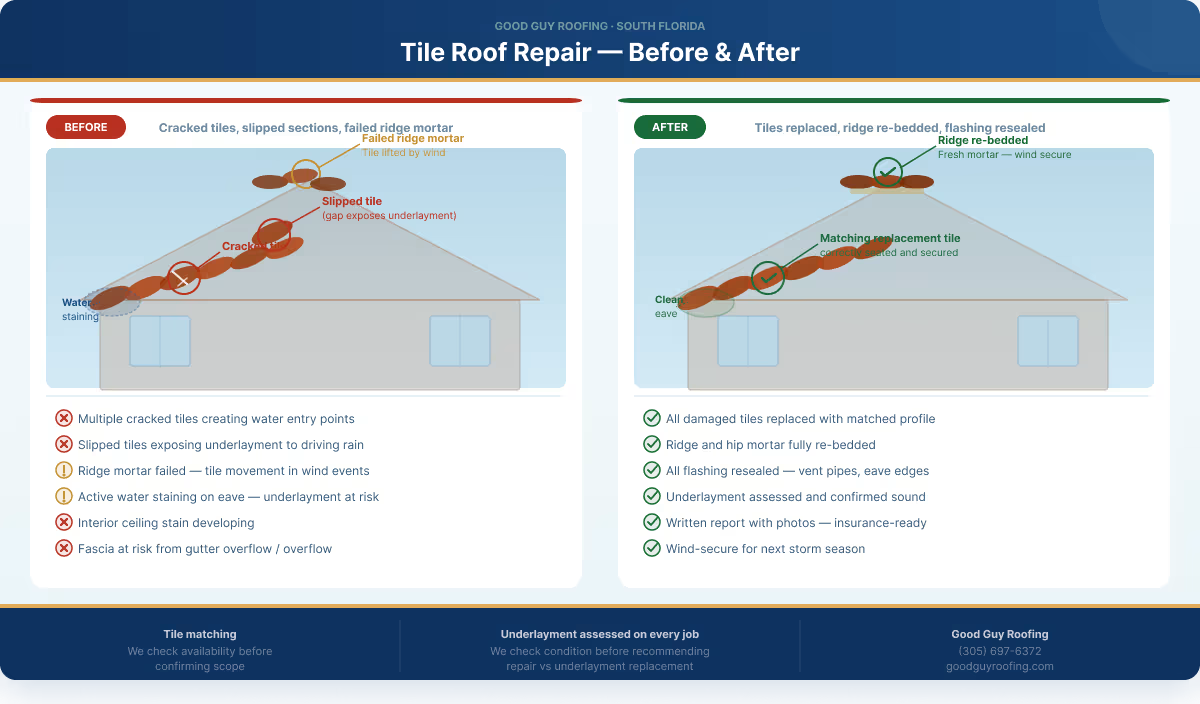
The repair is relatively straightforward – the tile is reset, the fastener replaced, and the surrounding mortar re-bedded if necessary. The cost is low when caught early. The cost is considerably higher if slipped tiles have been driving water under the underlayment for a season or two.
Failed Ridge and Hip Mortar
The ridge (the peak of the roof) and the hips (the diagonal edges where two slopes meet) are finished with tiles bedded in mortar or secured with foam adhesive. These are the highest, most exposed points on the roof – they take the most direct wind exposure, and the most intense UV radiation – and the bedding material degrades faster here than anywhere else.
Loose or failed ridge tiles are one of the most common findings on South Florida tile roofs over 15 years old. A ridge tile that has shifted even slightly is an active wind vulnerability – in a storm, it can become a projectile. A ridge tile that has detached from its mortar bed is allowing water direct access to the underlayment at the highest point of the roof.
Ridge and hip re-bedding is one of the most valuable preventive maintenance repairs available for an aging tile roof. It is not glamorous, and it is not visible from the street after the work is done – but it is one of the main things that determines whether your roof gets through the next hurricane season in one piece.
Underlayment Failure
This is the most significant and most expensive tile roof problem – and the one that is most frequently missed until it becomes a major issue.
In Florida’s climate, underlayment has a finite lifespan. Older felt paper underlayment installed before the post-Hurricane Andrew building code reforms can be as little as 15 to 20 years old before it reaches the end of its functional life. Modern modified bitumen SWB underlayment typically lasts 25 to 35 years. The tiles above it – which can last 40 to 50 years – will outlive the underlayment by a decade or more.
This creates a scenario very common in South Florida: a tile roof that looks perfectly sound from the street, with no broken or missing tiles, but is leaking due to a completely failed underlayment.
The tiles are doing their job – they’re shedding most of the rain. But in heavy driving rain with any wind, water is finding its way past the tile edges and into an underlayment that can no longer stop it.
| How to tell if underlayment failure is the issue:
Leaks that appear during heavy rain but not light rain. Water that enters a different location from where you can see any visible tile damage. Water staining that appeared gradually rather than after a specific impact or storm. A roof that is 20+ years old with no record of underlayment replacement. Any of these should prompt an underlayment assessment before you spend money on tile-level repairs that won’t solve the underlying problem. |
Why tile roofs leak
| Not sure if it’s the underlayment? Get an underlayment assessment |
Tile Roof Repair Costs in South Florida
Repair costs vary significantly based on the scope of work, tile availability, and whether structural issues are discovered during the job. Here are realistic ranges for common tile roof repairs in the South Florida market.
| Repair type | Typical cost range | Notes |
| Single tile replacement (1–3 tiles) | $200 – $500 | Includes labour, tile matching attempt, and mortar. Cost rises if tile is discontinued. |
| Small section repair (4–15 tiles) | $400 – $1,200 | Typically same-day. Includes tile removal, underlayment inspection, re-mortar, and replacement. |
| Flashing repair / reseal | $250 – $800 | Chimney, vent, or valley flashing. Sealant-only vs. full reflash significantly affects cost. |
| Ridge/hip re-bedding (partial) | $600 – $2,000 | Mortar bedding on ridges and hips degrades over time. One of the most common tile roof repairs. |
| Ridge/hip re-bedding (full) | $2,000 – $6,000+ | Full perimeter re-bedding on a larger home. Often most cost-effective as a single job. |
| Underlayment replacement (partial) | $3,000 – $8,000 | Tiles removed, underlayment replaced in affected section, tiles re-laid. Complex and labor-intensive. |
| Full underlayment replacement | $8,000 – $20,000+ | All tiles removed, full SWB underlayment installed, tiles inspected and re-laid or replaced. Extends roof life by 20–30 years. |
| Structural deck repair | $1,500 – $8,000+ | Rotted or damaged decking discovered during underlayment work. Cost depends on extent of damage. |
Costs are estimates for South Florida residential properties. Actual costs vary by property size, tile type, access, and contractor. A discontinued tile may increase costs significantly.
The Tile Matching Problem
One factor that affects repair cost more than many homeowners expect is tile matching. Concrete and clay tiles have been manufactured in hundreds of profiles, colors, and finishes over the decades.
If your tile was discontinued – and a large proportion of tile profiles from the 1980s and 1990s are no longer in production – finding matching replacement tile for a small repair can be difficult or expensive.
- If you cannot find an exact tile match, you have a few options.
- Check salvage yards for discontinued styles.
- Contact specialty tile suppliers that may still have older stock.
- If needed, replace the entire section.
This can help avoid a visible mismatch in a large area.
When you get a repair estimate, ask specifically about tile availability and whether the replacement will be visible and unmatched. A contractor who skips this conversation is one you want to ask again.
Repair vs Underlayment Replacement: How to Decide
This is the most important decision most tile roof owners face, and the answer depends on a clear-eyed assessment of a few variables.
Tile roof repair before and after
Age of the Underlayment
If the underlayment is under 20 years old and was installed with modern materials, tile-level repairs make sense. If the underlayment is 25 years old or more, tile-level repairs address symptoms rather than the underlying cause. You may fix the immediate leak – but the underlayment will fail again elsewhere within the next rain season.
Ask your contractor how old the underlayment is. If the answer is unknown – which is common when a home has changed hands – a professional inspection can assess the condition and estimate age from the material characteristics.
Extent of Leak Activity
A single localized leak with a clear cause (one cracked tile over an otherwise sound roof) is a repair job. Multiple leak points, diffuse water entry, or water that appears in a different location from where the visible damage is – these are classic signs of underlayment failure that individual tile repairs won’t fix.
Cost Comparison
Partial underlayment replacement for a meaningful section of a roof might run $3,000 to $8,000. A full underlayment replacement typically costs $8,000 to $ 20,000 or more. But consider the alternative: if the underlayment is at the end of life and you’re doing repeated tile repairs every year or two, those costs add up quickly – and you’re also running the risk of water damage to the structure, insulation, and interior that is far more expensive to remediate.
A good contractor should be able to make a direct recommendation: repair, partial underlayment replacement, or full underlayment replacement. If they won’t give you a clear opinion, that’s worth noting.
The decision framework:
|
Frequently Asked Questions
Can you replace only a few broken roof tiles?
Yes – and for a roof with sound underlayment and isolated tile damage, this is exactly the right approach. Replacing individual tiles is straightforward when the replacement tile is available or a close match can be sourced. The complication is availability: if your tile profile is discontinued, finding matching tile may add time and cost to what would otherwise be a simple repair. A good contractor will check availability before confirming the scope and will tell you if the repair will result in a visible mismatch. What a tile replacement won’t fix is a leak caused by failed underlayment – so it’s worth confirming what’s actually causing the water entry before deciding on the repair method.
Why does my tile roof leak if the tiles look fine?
This is one of the most common and most confusing tile roof problems, and the explanation is straightforward once you understand how the roof system works. The tiles are not the waterproof layer – the underlayment beneath them is. A tile roof with perfectly intact tiles can still leak if the underlayment has deteriorated. Underlayment failure is especially common in South Florida because of the intense UV exposure, high heat, and humidity that accelerate the degradation of the modified bitumen or felt materials used. A roof that was installed 25 or 30 years ago with the underlayment of that era may have tiles that look perfectly sound, while the underlayment beneath them has been failing gradually for years. The other common cause is flashing failure – the metal sealing around chimneys, vent pipes, and skylights can lift or lose its sealant bond without any tile damage being visible.
How long does tile underlayment last in Florida?
It depends on the material and the installation era. Older felt paper underlayment installed before the post-Hurricane Andrew building code reforms – particularly on homes built in the 1970s and 1980s – typically has a functional life of 15 to 20 years. Modern modified bitumen SWB underlayment, which is now required by the Florida Building Code in High-Velocity Hurricane Zones, typically lasts 25 to 35 years under South Florida conditions. The tiles above it can last 40 to 50 years. This means a well-maintained tile roof will typically need at least one underlayment replacement during its lifespan – the tiles are removed, new underlayment installed, and the tiles are re-laid or replaced if damaged. This is normal maintenance for a long-lived tile roof, not a sign of failure.
Is tile repair cheaper than full roof replacement?
For isolated damage on a roof with sound underlayment – yes, significantly. A few tile replacements or a ridge re-bedding job is a fraction of the cost of a full replacement. The calculation changes when the underlayment is at or near the end of life. At that point, tile-level repairs are addressing symptoms: you’ll spend money on repairs that buy you some time, but the underlying problem will recur. A full underlayment replacement – where tiles are removed, new underlayment is installed, and tiles are re-laid – typically costs $8,000 to $20,000+ for a standard South Florida home. A full roof replacement, including new tiles, starts higher. If your tiles are in good condition and only the underlayment needs replacing, replacing the underlayment is nearly always the more cost-effective path because you’re preserving a tile surface that still has decades of life left.
Can I walk on a tile roof safely?
Not without knowing what you’re doing, and not without the right footwear. Tile is brittle underfoot – a single misplaced step can crack a tile that was structurally sound, and the resulting damage may not be visible until it starts leaking. Professional roofers who work on tile roofs know how to distribute their weight, where to step (on the overlap points rather than the main body of the tile), and how to move across the surface without damage. The general guidance for homeowners is to stay off the tile roof entirely. Ground-level observation, attic checks, and calling a professional are the right approach. If you need to get onto the roof for any reason – to clear debris, for example – a professional can show you the correct technique for your specific tile profile, but the safer answer is to let them do it.
Getting Tile Roof Repairs Right in South Florida
Tile roofs are one of the most durable roofing options available – but durable doesn’t mean maintenance-free, and the tile surface itself is only part of the system. Understanding that the underlayment is the waterproofing layer, that tile looks fine from the street even when the underlayment is failing, and that ridge and hip bedding needs periodic attention are the three things that separate homeowners who get good outcomes from their tile roofs from those who don’t.
The most valuable thing you can do if you have an active leak or a roof over 20 years old is get a proper assessment from a licensed contractor who works specifically with tile roofs – not a general roofer who occasionally patches tile. Tile roofs in South Florida have specific failure modes, repair techniques, and code requirements that require genuine expertise.
We inspect and repair tile roofs across Palm Beach County, Broward County, and Miami-Dade County. Free inspection, written assessment, no obligation. Schedule a roof replacement.


