Metal Roofing in Coastal Florida: Corrosion, Wind Ratings, Noise, and ROI
For decades, asphalt shingles and tile roofs have dominated residential roofing across South Florida.
But that’s changing.
More homeowners in Palm Beach County, Broward County, and Miami-Dade County are choosing metal roofing when it’s time for a roof replacement, and not simply because it looks modern.
They’re choosing it because coastal Florida is one of the harshest roofing environments in the country.
Between hurricane-force winds, intense UV exposure, heavy rainfall, salt-laden air, and year-round humidity, roofing materials face challenges that homeowners in most other states never encounter.
A roof that performs well in Atlanta or Charlotte may deteriorate much faster in Fort Lauderdale or Boca Raton.
That’s where metal roofing stands apart.
A properly installed metal roof can withstand hurricane conditions, resist corrosion, improve energy efficiency, and last decades longer than traditional roofing materials.
But it also comes with questions.
- Will it rust near the ocean?
- Is it noisy when it rains?
- Does it make the house hotter?
- Is it actually worth the higher upfront cost?
This guide answers those questions and explains what homeowners in coastal South Florida should know before investing in a metal roof.
Why Metal Roofing Is Growing in Popularity Across South Florida
The traditional roofing conversation often focuses on upfront cost.
The better question is lifetime value.
A roof isn’t a five-year purchase. It’s a 20, 30, or even 50-year investment that protects everything beneath it.
Many homeowners are beginning to evaluate roofing systems the same way they evaluate appliances, vehicles, or HVAC systems: not just based on purchase price, but based on durability, maintenance requirements, performance, and total ownership cost.
Metal roofing scores exceptionally well across all four categories.
Unlike asphalt shingles, which gradually deteriorate under Florida’s UV exposure, metal roofing remains structurally stable for decades.
Unlike tile roofs, metal roofing is lightweight and less vulnerable to impact damage.
And unlike many traditional roofing systems, metal can significantly improve a home’s resistance to hurricane-related damage.
For coastal homeowners, those advantages add up quickly.
How a Metal Roofing System Actually Works
One of the biggest misconceptions homeowners have about metal roofing is that the metal panels themselves are what make the roof waterproof.
They aren’t.
Just like tile roofing systems, a metal roof is actually a collection of components working together. The visible metal panels are only one part of a much larger weatherproofing system.
Understanding how that system works is important because it explains why some metal roofs perform flawlessly for decades while others develop leaks, corrosion, or storm damage far sooner than expected.
A properly installed metal roofing system typically consists of:
- Roof decking
- Underlayment
- Fastening system
- Flashings
- Metal panels
- Ridge ventilation system
Each layer serves a specific purpose.
The roof decking provides structural support. The underlayment creates a secondary water barrier beneath the metal panels. Flashings protect vulnerable areas where water naturally concentrates, such as valleys, chimneys, skylights, and wall transitions.
The metal panels themselves act as the primary weather shield, deflecting rain, UV exposure, and wind-driven moisture.
This distinction matters because when a metal roof leaks, the problem often isn’t the panel itself.
In many cases, leaks originate from failed flashing details, improperly sealed penetrations, poor fastening methods, or installation shortcuts.
This is why installation quality often matters more than the material itself.
A premium aluminum standing seam roof installed incorrectly can perform worse than a properly installed steel roof with quality underlayment and flashing.
In coastal South Florida, where roofs face hurricane-force winds, this becomes even more important.
During major storms, uplift pressure doesn’t simply pull upward on a roof. Wind creates complex pressure changes around ridges, eaves, corners, and roof transitions. Every fastener, seam, flashing detail, and attachment point becomes critical.
A properly engineered metal roofing system distributes these forces across the entire roof assembly.
A poorly installed system creates weak points that can fail long before the metal itself reaches the end of its lifespan.
This is why homeowners should evaluate more than just material choice when comparing roofing proposals.
Ask questions about:
- Underlayment specifications
- Wind rating certifications
- Attachment methods
- Fastener systems
- Flashing details
- Manufacturer warranties
The answers often reveal more about long-term performance than the metal panel itself.
How Metal Roofs Handle Florida’s Coastal Environment
Florida’s coastal environment creates a unique combination of stresses on roofing systems.
The primary challenges include:
| Environmental Factor | Impact on Roofing |
| Salt Air | Accelerates corrosion on exposed metals |
| UV Exposure | Breaks down roofing materials over time |
| Hurricane Winds | Creates uplift forces on roofing systems |
| Heavy Rainfall | Tests waterproofing systems |
| Humidity | Increases moisture-related deterioration |
Most roofing materials struggle with at least one of these factors.
Metal roofing, when properly specified and installed, performs exceptionally well against all of them. The key phrase is “properly specified.” Not all metal roofs are created equal.
The type of metal, protective coating, installation method, and fastening system all influence long-term performance.
Do Metal Roofs Rust Near the Ocean?
This is easily the most common concern homeowners have. It’s also one of the biggest misconceptions. Many people hear “metal roof” and picture rusted farm buildings or aging corrugated steel structures.
Modern residential metal roofing is completely different. Today’s systems are engineered specifically to withstand coastal environments. The level of corrosion resistance depends largely on the material being used.
Aluminum Roofing
Aluminum is considered the gold standard for homes located close to the coast. Unlike steel, aluminum naturally forms a protective oxide layer when exposed to air. This means it cannot rust in the traditional sense.
Advantages include:
- Exceptional salt-air resistance
- Lightweight construction
- Long lifespan
- Minimal maintenance requirements
The trade-off is cost.
Aluminum generally costs more than steel roofing systems.
However, for homes within a few miles of the ocean, many roofing professionals consider the investment worthwhile.
Galvalume Steel Roofing
Steel roofing remains extremely popular throughout Florida.
Modern steel roofing is protected using Galvalume coatings; a combination of aluminum and zinc that dramatically improves corrosion resistance.
When paired with premium paint systems, Galvalume steel performs very well even in coastal environments.
However, homes directly on the waterfront may still benefit from aluminum due to its superior salt-air performance.
Aluminum vs Steel Roof: Which Is Better?
| Factor | Aluminum | Steel |
| Corrosion Resistance | Excellent | Very Good |
| Coastal Performance | Excellent | Good to Very Good |
| Weight | Lighter | Heavier |
| Cost | Higher | Lower |
| Durability | Excellent | Excellent |
For most South Florida homes, both are excellent choices when installed correctly.
Understanding Metal Roof Coatings: The Difference Between a 20-Year Roof and a 50-Year Roof
When homeowners compare aluminum vs steel roofing, they often focus entirely on the metal itself.
In reality, one of the most important factors affecting long-term performance is something most people never see: The coating system.
Florida’s climate is uniquely aggressive. Intense UV exposure, salt-laden air, high humidity, and frequent storms continuously attack roofing materials.
Without proper protection, even high-quality metal can deteriorate prematurely. Modern residential metal roofing relies on multiple layers of protection.
The Base Metal
The first layer is the metal itself—typically aluminum or Galvalume steel. This provides structural strength and impact resistance.
Metallic Protective Coatings
Steel roofing is commonly coated with a zinc-aluminum alloy known as Galvalume. This coating acts as a sacrificial barrier.
If the paint layer becomes scratched or damaged, the Galvalume coating continues to protect the steel beneath from corrosion.
This is one reason modern steel roofing performs dramatically better than older metal roofing systems.
Paint Systems
The paint isn’t simply there for appearance.
Premium paint systems serve as the roof’s first line of defense against UV degradation, salt exposure, and weathering.
Most high-quality residential metal roofs use one of two systems:
| Coating Type | Performance |
| SMP (Silicone Modified Polyester) | Good |
| PVDF (Kynar 500®) | Excellent |
PVDF coatings are generally considered the gold standard for coastal applications.
They resist fading, chalking, peeling, and color degradation far better than standard paint systems.
This is especially important in South Florida, where roofs receive intense sunlight year-round.
Why Coastal Homes Need Better Coatings
A home located five miles inland experiences very different environmental conditions than a home directly on the Intracoastal Waterway or the Atlantic Ocean.
Salt particles carried by ocean breezes settle continuously on roofing materials.
Over time, this exposure accelerates wear.
For waterfront and near-coastal homes, investing in premium coatings often delivers substantial long-term value through reduced maintenance, improved appearance, and extended service life.
The Hidden Cost of Choosing the Cheapest Option
Two metal roofs can look nearly identical on installation day. Twenty years later, they can look completely different. One may still retain its color, finish, and corrosion resistance. The other may show fading, chalking, coating breakdown, and early signs of deterioration.
The difference often comes down to the coating system chosen at the beginning. This is why evaluating a metal roofing proposal based solely on price can be misleading. The type of metal matters. The installation matters.
But the protective coating often determines how well the roof handles decades of Florida weather.
Hurricane Resistance: Where Metal Roofing Really Shines
Wind resistance is one of the biggest reasons homeowners switch to metal roofing.
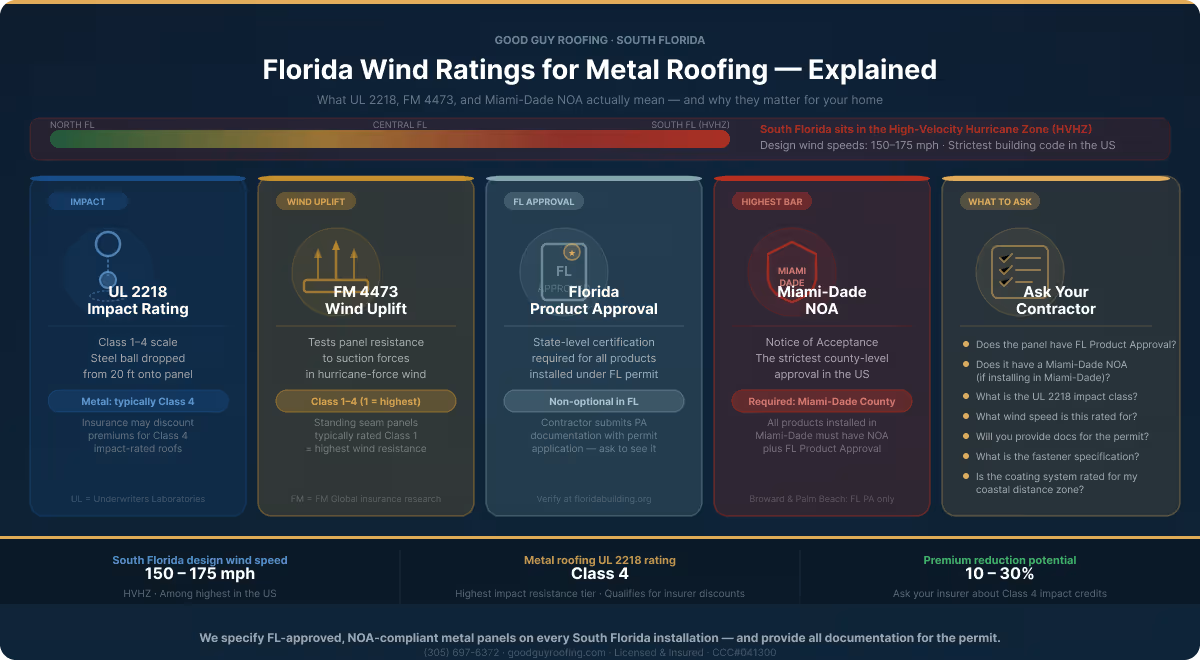
A properly engineered standing seam metal roof can achieve wind ratings exceeding 140 mph, with some systems tested to even higher standards.
That’s important in a state where hurricanes are not a possibility—they’re an inevitability.
Unlike shingles, which rely on adhesive strips and individual fastening points, standing seam systems use interlocking panels.
This creates a more secure roofing assembly capable of resisting significant uplift forces.
Benefits include:
- Reduced risk of blow-offs
- Better performance during major storms
- Fewer post-hurricane repairs
- Improved insurance appeal in some situations
For homeowners replacing an aging roof in South Florida, hurricane performance should be one of the primary decision factors.
What Is a Standing Seam Metal Roof?
When most homeowners imagine premium metal roofing, they’re thinking of standing seam.
A standing seam metal roof consists of long vertical panels connected by raised seams that lock together. The fasteners are concealed beneath the seams rather than exposed to the weather.
This provides several advantages:
- Cleaner appearance
- Reduced leak potential
- Better wind performance
- Greater long-term durability
- Lower maintenance requirements
While standing seam systems cost more than exposed-fastener panels, they are widely considered the premium residential metal roofing option.
For homeowners planning to stay in their property long-term, the additional investment often pays for itself through durability and reduced maintenance.
Are Metal Roofs Noisy During Rain?
This is probably the most persistent myth about metal roofing. Many people imagine rain hitting a metal roof sounding like a drum. In reality, modern residential metal roofs are installed over solid roof decking, underlayment, insulation, and attic space.
The result is very different from rain hitting a metal shed or barn. Most homeowners report little to no noticeable difference between a metal roof and other roofing materials.
In some homes, attic insulation can actually make a metal roof quieter than an older shingle roof. The reality is that a properly installed residential metal roof should not create disruptive interior noise during rainstorms.
Do Metal Roofs Make Homes Hotter?
Another common misconception. Metal is often associated with heat because it becomes hot when exposed to sunlight. However, roofing performance depends on reflection—not temperature alone.
Modern metal roofing systems are highly reflective. Many are manufactured with specialized coatings that reflect solar radiation rather than absorbing it.
Compared to dark asphalt shingles, metal roofs often absorb significantly less heat.
Potential benefits include:
- Reduced attic temperatures
- Lower HVAC workload
- Improved indoor comfort
- Reduced cooling costs
This is especially valuable in South Florida, where air conditioning is one of the largest household energy expenses.
The Real ROI of Metal Roofing
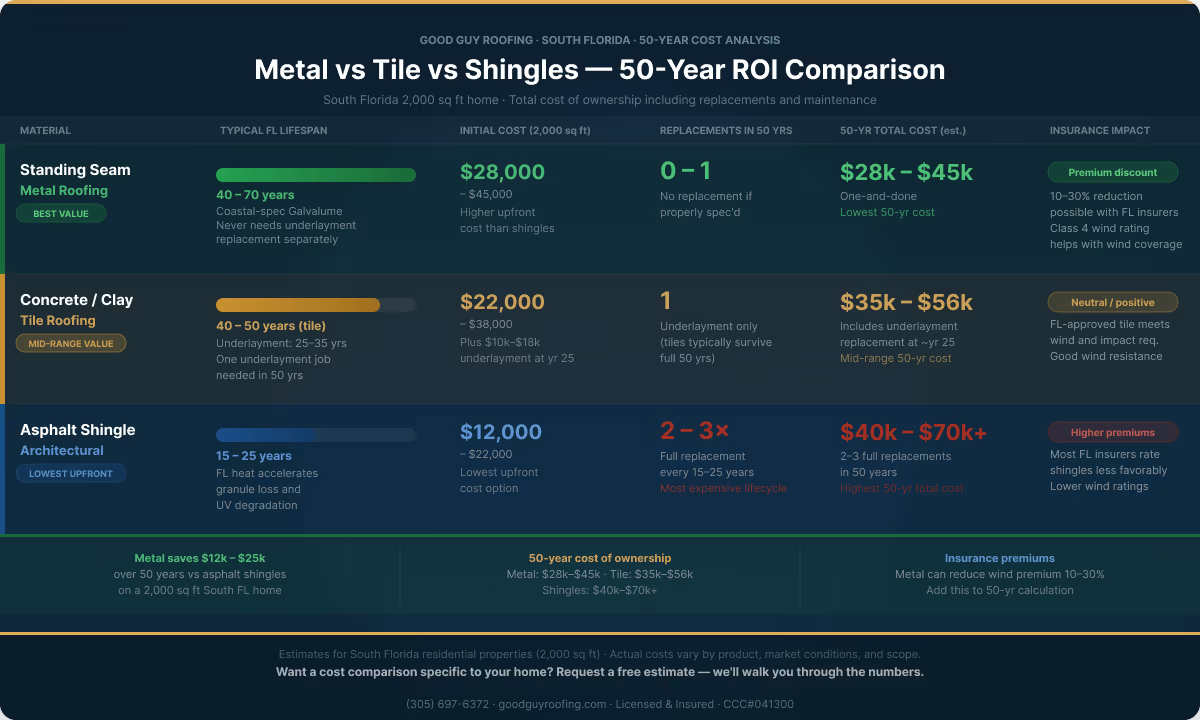
Metal roofing costs more upfront than asphalt shingles. That’s the reality. The better question is whether it costs less over the lifespan of the home.
Consider a simplified comparison:
| Roofing Type | Typical Lifespan |
| Asphalt Shingles | 15–25 Years |
| Concrete Tile | 30–50 Years |
| Metal Roofing | 40–70 Years |
A homeowner may replace a shingle roof two or even three times during the lifespan of a single metal roof.
When maintenance, repairs, storm resistance, and energy savings are included, the long-term economics become much more attractive.
The highest ROI often comes from:
- Fewer replacement cycles
- Lower maintenance costs
- Better hurricane resilience
- Potential insurance benefits
- Improved energy efficiency
- Increased property appeal
Wondering whether the numbers make sense for your property? Compare shingle vs metal pricing and see how the long-term costs stack up.
Is Metal Roofing Right for Your Home?
Metal roofing isn’t the right choice for every homeowner. But it makes tremendous sense if:
- You plan to stay in your home long-term
- Hurricane resistance is a priority
- You live near the coast
- You want lower maintenance
- You value long-term ROI over the lowest upfront cost
- Energy efficiency matters to you
For many South Florida homeowners, metal roofing represents a “buy once, cry once” investment, a higher initial cost that delivers decades of performance.
Request a Metal Roofing Florida Quote
Considering a metal roof replacement?
We install metal roofing systems throughout Palm Beach County, Broward County, and Miami-Dade County and can help you compare options, materials, colors, and pricing.
Request a metal roofing quote today
Frequently Asked Questions
Do metal roofs rust near the ocean?
Modern aluminum and coated steel roofing systems are specifically designed for coastal environments. Aluminum offers the highest corrosion resistance and is often recommended for homes closest to the ocean.
Are metal roofs louder in rain?
No. Modern residential metal roofs are installed over decking, underlayment, and insulation. Interior noise levels are typically comparable to other roofing materials.
Do metal roofs reduce cooling costs?
Often, yes. Reflective coatings help reduce solar heat gain, which can lower attic temperatures and decrease air-conditioning demand.
How long does a metal roof last in Florida?
Most quality metal roofs last between 40 and 70 years when properly installed and maintained.
Is a metal roof hurricane-resistant?
Yes. Premium standing seam metal roofing systems can achieve wind ratings exceeding 140 mph and are among the most hurricane-resistant residential roofing options available.


