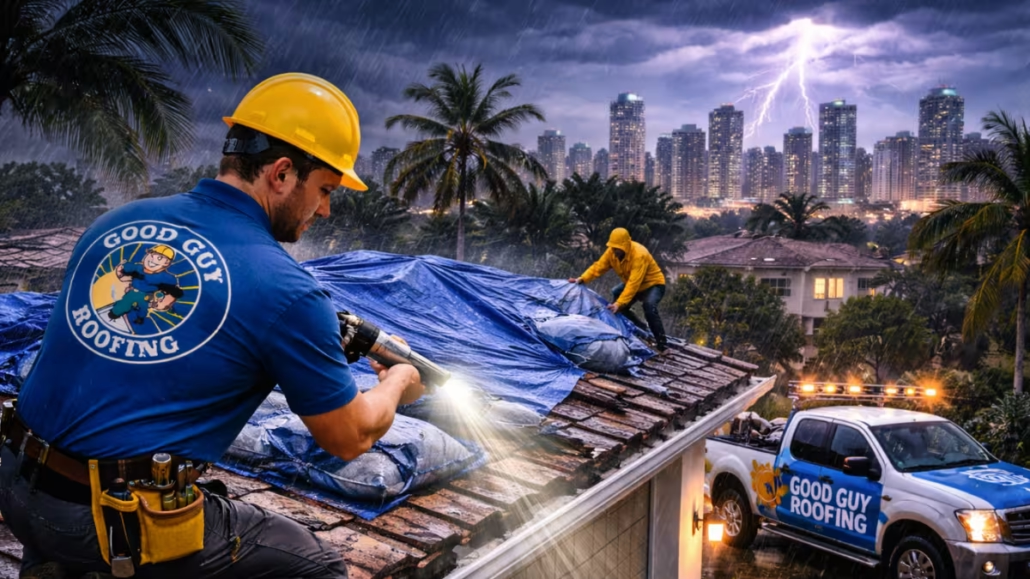
Emergency Roof Repair in Broward/Miami-Dade: What to Do First (and What It Costs)
Dealing with water leaking through your ceiling is a serious issue that requires immediate attention. You don’t have a week to research; you need quick answers on what to do in the next ten minutes, who to contact, and an estimate of the costs involved. This article aims to provide you with that information.
We’ve organized the content in a straightforward way. First, we’ll cover immediate safety steps, followed by how to minimize damage while waiting for a roofer, what to expect when you reach out to us, and finally, a breakdown of potential costs so you know what to anticipate.
If you’re located in Broward, Miami-Dade, or Palm Beach County, we have you covered for all three areas.
Step 1: The First Ten Minutes
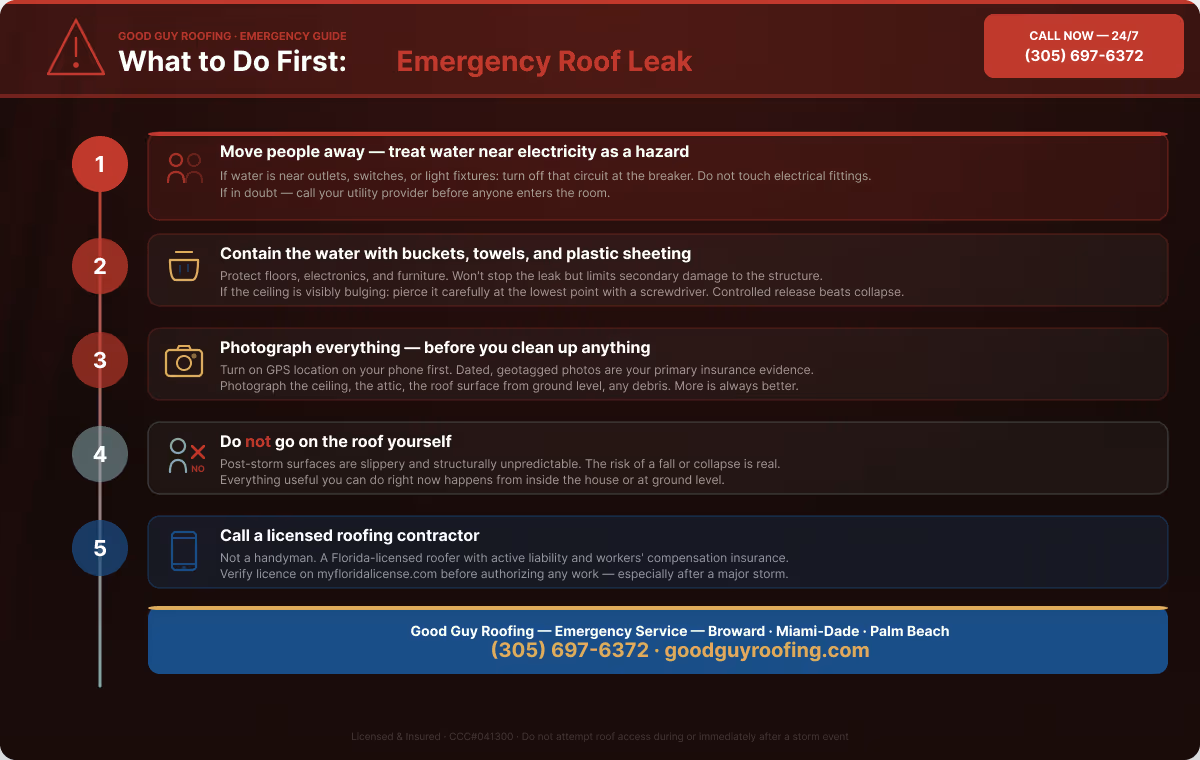
Before anything else, do not go on the roof yourself. Post-storm surfaces are slippery, structurally unpredictable, and dangerous without proper footwear and training. Everything useful you can do right now happens from inside the house or at ground level.
Here’s the sequence:
- Move people and valuables away from the affected area. If water is dripping near electrical fittings, switches, or outlets, don’t touch them. Turn off the circuit for that area at the breaker panel if you can do so safely.
- Contain the water. Buckets, towels, plastic sheeting on the floor; whatever you have. This won’t stop the problem, but it limits secondary damage to floors and walls.
- Photograph everything immediately. Turn on GPS location on your phone before you shoot. Dated, geotagged photos are your primary evidence of insurance. Don’t clean up before you document.
- If the ceiling is bulging or sagging, puncture it carefully at the lowest point. A controlled release of pooled water above the ceiling is better than a sudden collapse. Use a screwdriver and have a bucket ready.
- Call a licensed roofing contractor. Not a handyman, not a general contractor. A licensed roofer with active liability insurance and a Florida contractor’s license number. That’s the only person who should be going on that roof.
| Water near electricity is a serious hazard.
If water is actively dripping near electrical fixtures, or you can see it running down walls toward outlets, your first call should be to your utility company to shut off power to the affected area, or to an electrician, before anyone touches anything. This is not a roof problem at that moment; it’s an electrical safety problem. |
Step 2: Temporary Mitigation Before the Roofer Arrives
Depending on response time and weather conditions, there may be a window between when you call and when a roofer can safely get on your roof. Here’s what you can do in the meantime: only from inside the house.
- Attic access: If you have safe attic access and no standing water above, you can place buckets or plastic bins under the active drip point. This won’t stop damage to the deck, but it protects the ceiling below.
- Interior plastic sheeting: Furniture, electronics, flooring; cover anything that can’t be moved.
- Don’t use fans or heating immediately: Circulating air through a water-damaged space before it’s assessed can spread mold spores. Wait until the source is addressed.
- Note the location carefully: Try to identify roughly where on the roof the water is entering – which room it’s in, which direction the stain is tracking. This helps the roofer prioritize upon arrival.
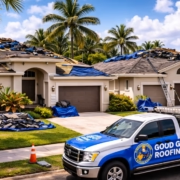
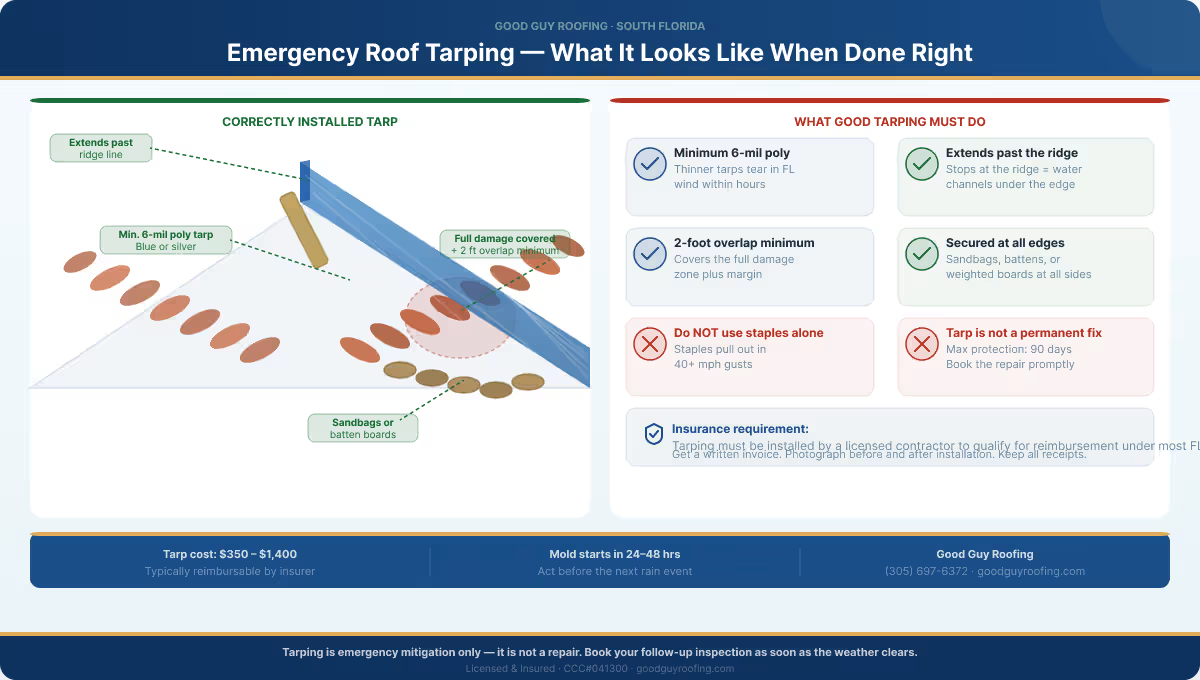
What about tarping it yourself? Only if you’re genuinely comfortable on a roof, have the right footwear, and the wind has fully died down. A 6-mil poly tarp weighted with sandbags or secured with battens can buy you time. If there’s any doubt, wait for the professional. A second injury doesn’t help the situation.
| Need emergency tarping now? Request emergency tarping. Call (305) 697-6372 |
What to Expect When You Call Good Guy Roofing
When you call Good Guy Roofing at (305) 697-6372, here’s what happens:
- We’ll ask you a few quick questions: your address, which county you’re in, what you’re seeing (active drip, ceiling stain, visible damage from the storm), and whether there are any electrical safety concerns.
- We’ll give you an honest ETA based on current conditions and workload. If a major storm just moved through Broward or Miami-Dade, we’ll tell you if there’s a queue; we won’t fabricate a timeline.
- We’ll advise you over the phone on any immediate safety steps specific to your situation.
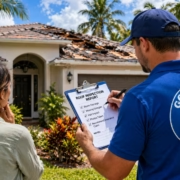
- When we arrive, we assess from the ground first, then the roof. We’ll tell you what we found and what the options are before we start any work. No surprises, no pressure.
One thing worth knowing: you have the right to a written estimate before any work begins. Emergencies sometimes create pressure to authorize work quickly. That’s understandable, and we move fast when needed, but you should always get the scope and cost in writing. We provide this as a matter of course.
Emergency Roof Repair Costs in South Florida (2026)
Prices below are typical ranges for Broward County, Miami-Dade County, and Palm Beach County. Actual cost depends on roof type, access, damage extent, and timing. After-hours callouts may carry a premium. Please note that these are merely estimates.
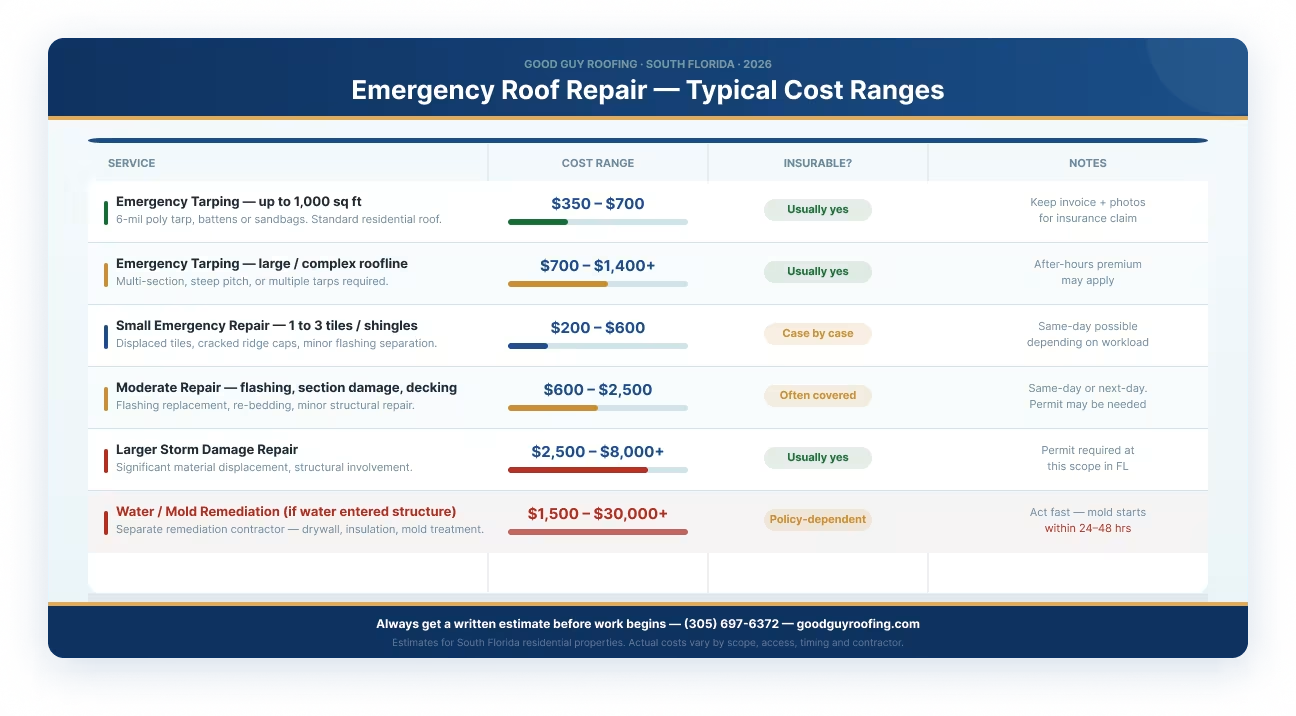
| Service | Typical cost range | Notes |
|---|---|---|
| Emergency tarping (up to 1,000 sq ft) | $350 – $700 | Min. 6-mil poly tarp, secured with battens or sandbags. Typically reimbursable under most FL homeowner policies. |
| Larger tarp / complex rooflines | $700 – $1,400+ | Multi-section roofs, steep pitches, or jobs requiring more than one tarp. |
| Small emergency repair (1–3 tiles/shingles) | $200 – $600 | Same-day repair for localized damage, displaced tiles, cracked ridge caps, and minor flashing separation. |
| Moderate repair (damaged section, failed flashing) | $600 – $2,500 | Flashing replacement, re-bedding, and damaged deck repair. Usually same-day or next-day. |
| Larger storm damage repair | $2,500 – $8,000+ | Significant material displacement or structural damage. May require a permit depending on the scope. |
| Water damage remediation (if water entered the structure) | $1,500 – $15,000+ | Separate from roofing, drywall, insulation, and mold. Addressed by a remediation contractor. |
All figures are estimates for South Florida residential properties. Costs vary by scope, material, and contractor. Ask for a written estimate before work begins.
| Insurance note:
Emergency tarping and temporary mitigation costs are reimbursable under most Florida homeowner policies as “mitigation expenses.” Keep every receipt. Photograph the work before and after. We provide a written invoice for all emergency work; you’ll need this for the claim. For more on navigating insurance claims, see our Florida Roof Insurance Claims guide on the blog. |
One Warning: Storm Chasers Are Active After Every Major Event
After any hurricane or named tropical storm in South Florida, unlicensed out-of-state contractors move in quickly. They knock on doors, offer rapid work, take deposits, and either do substandard jobs or disappear. This is an ongoing and well-documented problem in Broward and Miami-Dade counties specifically.
Before you authorize any emergency roof work:
- Verify the contractor’s Florida license on the DBPR website (https://myfloridalicense.com ). Takes two minutes. A legitimate contractor won’t object.
- Confirm they carry active liability insurance and workers’ compensation. Ask for the certificate. If they hesitate, walk away.
- Never sign an Assignment of Benefits (AOB) agreement. These transfer your insurance rights to the contractor and are a common tool of unscrupulous operators. They are no longer permitted under Florida law; any contractor presenting one should be a hard stop.
- Get everything in writing before work starts — scope, materials, cost, timeline.
| Is the damage extensive?
If the storm revealed a roof that was already near the end of its life, emergency repair may be the right short-term fix, but a conversation about replacement is worth having. We’ll tell you the truth about your situation. Explore Roof Replacement options. |
Frequently Asked Questions
Is emergency roof repair available after hours?
Yes. We respond to emergency calls across Broward, Miami-Dade, and Palm Beach Counties after hours, including during and immediately after storm events. Response time varies based on active conditions and the current volume of emergency calls in the area. We’ll always give you a straight answer on where you are in the queue rather than an unrealistic promise. For the fastest response, call (305) 697-6372 directly rather than submitting a web form.
How much does emergency roof tarping cost?
Typically $350 to $700 for a standard residential roof up to around 1,000 square feet, using a minimum 6-mil poly tarp secured with battens or weighted edges. Larger homes, complex rooflines, or jobs requiring multiple tarps run higher, generally $700 to $1,400 or more. After-hours callouts may carry an additional premium. The good news: emergency tarping is considered mitigation under most Florida homeowners’ insurance policies, which means the cost is typically reimbursable. Keep the invoice and photograph the work before and after.
Will my insurance cover emergency mitigation?
In most cases, yes, with conditions. Florida homeowner policies generally cover “reasonable and necessary” emergency mitigation costs, including tarping, temporary repairs, and actions taken to prevent further damage. The key requirements are that a licensed contractor must perform the work, you must have receipts and documentation, and the costs must be reasonable for the scope. What insurance typically won’t cover: work done before the policy period, damage attributable to pre-existing neglect, or costs that exceed what a reasonable mitigation would require. We provide written invoices and documentation for all emergency work, specifically to support the claims process.
How fast can a ro ofer respond?
Under normal conditions, we can typically reach properties in Broward and Miami-Dade Counties within 2 to 4 hours of your call. During and immediately after a major storm event — when dozens of properties across the county are affected simultaneously — realistic wait times may be longer, and we’ll tell you that honestly. The single most effective thing you can do to get faster service is to call rather than submit a form, and to call as soon as you identify the problem rather than waiting to see if it worsens.
What should I do if water is actively coming in right now?
First: move people and valuables away from the affected area, and if water is near any electrical fixtures, treat it as an electrical hazard, turn off the circuit at the breaker, or call your utility provider. Then contain what you can with buckets and plastic sheeting, and photograph everything before cleaning anything up. If the ceiling is visibly bulging, make a small puncture at the lowest point to release pooled water in a controlled way. Then call us at (305) 697-6372. Don’t go on the roof yourself — post-storm conditions are genuinely dangerous, and the risk of a second injury on top of a storm-damaged roof is not worth it.
The Best Emergency Roof Repair Services in Miami
Good Guy Roofing serves Broward County, Miami-Dade County, and Palm Beach County. Licensed, insured, and locally based in Pompano Beach. If you’re dealing with storm damage or an active leak right now, the fastest next step is a phone call.