How Long Does a Roof Replacement Take in Florida? (Timeline + What Can Delay It)
How long does a roof replacement take? Most homeowners who ask how long a roof replacement takes in Florida are trying to plan and know whether to book time off work, whether the noise will be an issue for the week, whether they need to board the dog somewhere, or simply whether the job will be done before the rainy season opens.
These are sensible questions, and the honest answer is that it depends on more variables than most people expect.
The actual installation, tear-off, underlayment, new material, and flashings typically take one to three days for a standard residential home. But the full project, from the first call to permit closeout, usually takes two to four weeks for a straightforward job.
Add in Florida-specific factors like permit processing timelines across different counties, inspector scheduling, and material availability for tile and metal, and four to eight weeks is a realistic range for many homeowners.
This guide walks through every stage, what’s normal, and what can slow things down. We also handle permits and inspections on behalf of our clients so if you’d rather not think about that piece, you don’t have to.
The Full Timeline at a Glance
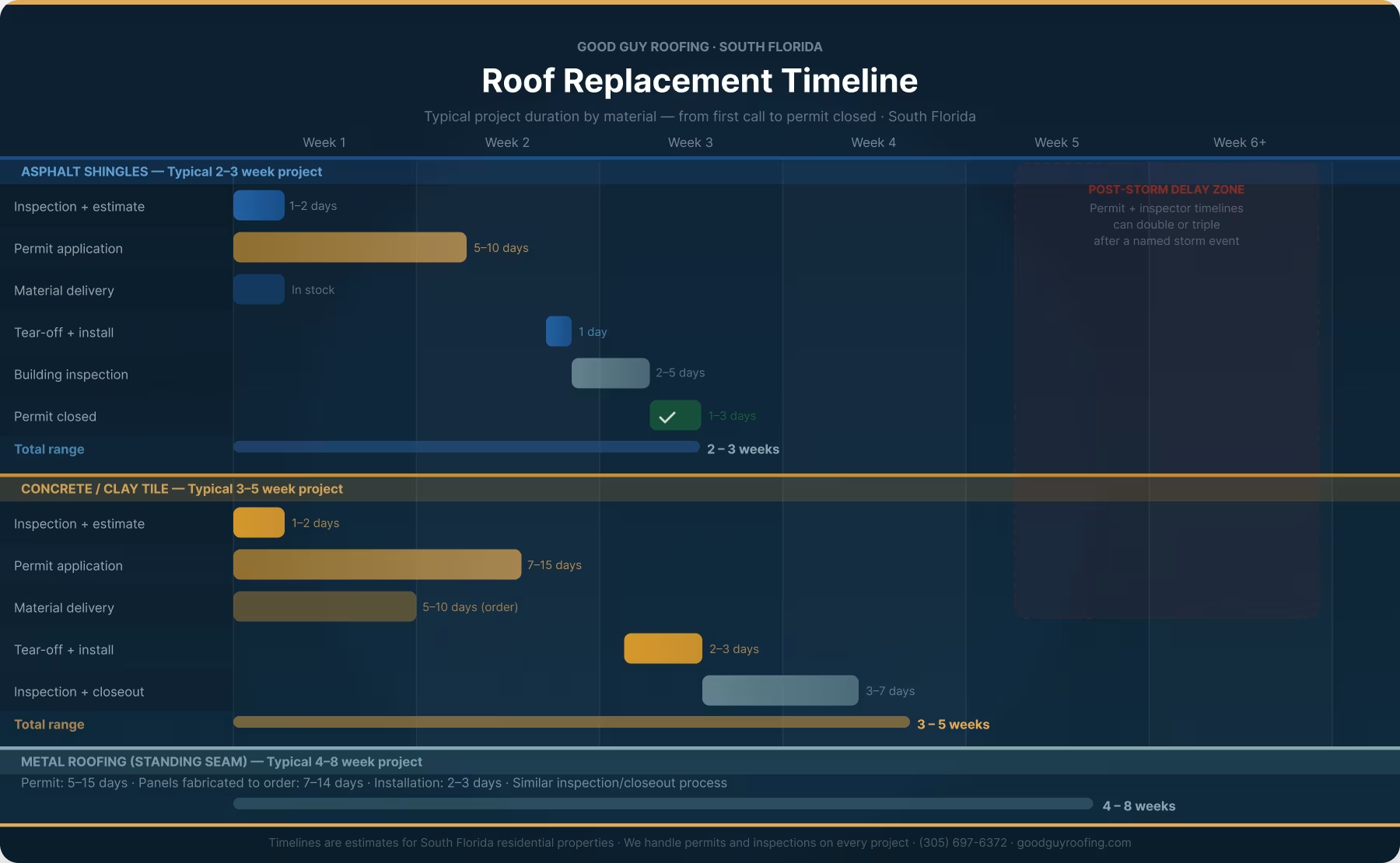
Here’s every stage of a Florida roof replacement, with realistic duration ranges and the factors that most commonly cause delays at each step.
| Stage | Typical duration | What happens / what can delay it |
|---|---|---|
| Inspection & estimate | 1-2 days | Free inspection, written estimate, and material selection. Delays: scheduling during peak season (May-June). |
| Permit application | 3-15 business days | Contractor submits to the county building department. Miami-Dade can be faster online; Palm Beach runs longer. Post-storm volume slows all counties. |
| Material ordering | 1-5 days | Shingles typically in stock. Tile and metal may require ordering — 3-10 days, depending on the product. Specialty or discontinued tile can take longer. |
| Tear-off and installation | 1-3 days (most homes) | 1,500-2,500 sq ft homes: usually 1 day for shingles, 2-3 for tile or metal. Larger homes, complex rooflines, or discovered deck damage add time. |
| Inspection(s) | 1-5 days per stage | Deck inspection before installation, final inspection after. Inspector scheduling varies by county and post-storm demand. |
| Permit closeout | 1-3 days | Contractor submits inspection sign-off. The building department closes the permit in their system. You receive documentation. |
| Total – straightforward project | 2-4 weeks | From the first call to the permit being closed. Tight end of range with stock materials and cooperative weather/inspector scheduling. |
| Total – with common delays | 4-8 weeks | Specialty tile order, post-storm permit backlog, or inspector wait times push the timeline out. Normal, not a sign of problems. |
Timelines are estimates for South Florida residential properties. County-specific permit and inspector timelines vary.
Stage by Stage: What’s Actually Happening
Stage 1: Inspection and Estimate
Everything starts here. A licensed roofing contractor inspects your roof, explains what needs replacing and why, and provides a written estimate. For most homeowners, this takes one appointment, usually 45 minutes to an hour on-site.
If you’re getting multiple quotes (which is sensible for a project of this size), allow a few days to get everything back and compare. Don’t let a contractor pressure you into a same-day decision on a full roof replacement. A reputable company won’t do that.
Stage 2: Permit Application
This is where Florida’s process diverges most significantly from what you might expect in other states. A roof replacement permit is legally required for any full reroof in Florida, no exceptions. Your contractor applies to the local building department. They submit the scope of work, material specs, Florida Product Approval documents, and project value.
Processing times vary meaningfully by county:
- Miami-Dade: 3-10 business days through the online portal for straightforward residential jobs. Miami-Dade has its own stricter product approval requirements (the NOA system) but has invested in digital permitting infrastructure.
- Broward County: 5-10 business days are typical. E-permitting is available. Individual municipalities within Broward (Fort Lauderdale, Coral Springs, Pompano Beach) each have their own building departments, so address matters.
- Palm Beach County: 5-15 business days for unincorporated areas. Incorporated cities, such as Boca Raton, West Palm Beach, and Delray Beach, permit through their own city departments, with their own timelines.
The biggest external factor that stretches permit timelines: post-storm volume. After a major hurricane or tropical storm affecting the region, building departments receive thousands of permit applications simultaneously. Processing times can double or triple. This is normal, not a failure; it’s simply the system under load.
| We handle the permit:
At Good Guy Roofing, permit applications, follow-up, and final closeout are part of the job, not an add-on. We submit, track, and manage the process, and we’ll keep you informed of where things stand. You don’t need to deal with the building department. |
Stage 3: Material Ordering
Material availability affects scheduling more than most homeowners realize. The short version:
- Asphalt shingles are almost always in stock locally. Scheduling is rarely held up by shingle availability.
- Concrete tile is generally available within a few days for common profiles and colors. Matching an existing tile that’s been discontinued or is no longer locally stocked can take significantly longer, sometimes weeks.
- Clay tile often requires ordering, particularly for premium profiles. Allow 5-14 days, depending on the product.
- Metal roofing, particularly standing seam, is typically fabricated to order. Lead times of 1-2 weeks for panels are common, and some specialty systems take longer.
If you’re replacing a tile roof and your tiles are discontinued, this is worth addressing early in the conversation. Your contractor should check availability before you commit to matching; sometimes switching to the closest current equivalent is faster and less expensive than sourcing discontinued stock.
Stage 4: Tear-Off and Installation
This is the part most people picture when they think about roof replacement, and it’s actually the shortest stage. For a typical single-family home in South Florida:
- Asphalt shingles, 1,500-2,500 sq ft: Usually one full day. A well-organized crew can tear off and reshingle a standard gable or hip roof in a single day in most cases.
- Concrete or clay tile, 1,500-2,500 sq ft: Two to three days. Tile installation is more labor-intensive — each tile is placed and secured individually, and ridge and hip tiles require mortar or foam adhesive application.
- Metal (standing seam), 1,500-2,500 sq ft: Two to three days for a standard residential job, depending on roofline complexity. Requires specialist equipment and experience.
- Larger homes or complex rooflines: Add one to two days. Multiple roof levels, dormers, skylights, and chimneys all add installation time.
The most common reason installation takes longer than expected is the discovery of deck damage. Once the old roofing material is removed, damaged decking, rotted sheathing, or compromised framing may be visible that wasn’t apparent during the initial inspection. This isn’t unusual. It’s why honest contractors quote deck repairs as a possible extra item, not as a fixed line item. We document everything found and provide a revised scope before continuing.
| Weather and installation:
Florida’s rainy season (June through September) means afternoon storms are a near-daily occurrence. Experienced roofing crews plan around this, starting early and having the roof dried in by early afternoon when possible during the rainy season. A well-managed job shouldn’t be significantly disrupted by typical South Florida summer weather patterns. A direct hit from a tropical system is a different matter, and work will be paused for safety. |
Stage 5: Inspections
Florida’s roofing permit process requires inspections at specific stages. This is a good thing — it’s the state’s mechanism for verifying that the work meets code. But it does add time, and inspector scheduling is entirely outside the contractor’s control.
Typical inspection stages:
- Deck inspection: Before new material is installed. The inspector checks the condition of the sheathing, deck attachment, and structural framing.
- Underlayment inspection: Some counties inspect the secondary water barrier before tile or other materials go on top.
- Final inspection: Once installation is complete. Checks material placement, flashing condition, ridge details, and eave finish.
Inspector availability fluctuates with workload. During a normal period, inspections can often be scheduled within a day or two of request. After a storm, when inspectors also assess damage across the county, the same inspection may take a week to schedule. This is the most common source of project timeline uncertainty that is genuinely outside anyone’s control.
What Can Delay Your Roof Replacement
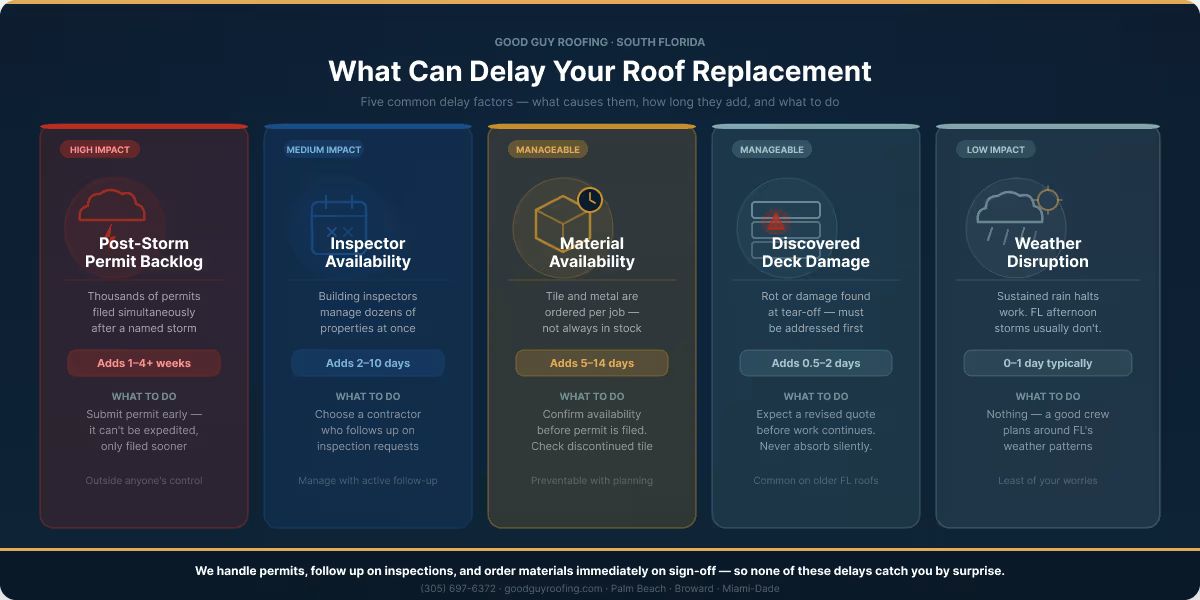
Most delays fall into one of five categories:
- Post-storm permit backlog: The single most common delay for South Florida homeowners. Nothing to do about it except submit early.
- Inspector scheduling: Especially in Miami-Dade and Broward, after major events. Work with a contractor who actively tracks and follows up on inspection requests rather than waiting passively.
- Material availability: Mainly affects tile and metal. Identify your material early and confirm availability before the permit is submitted.
- Discovered deck damage: Adds 0.5-1 day of installation time and requires updated documentation. Not unusual, especially on older roofs.
- Weather: Sustained rain stops roofing work. A standard Florida afternoon storm does not. A licensed crew will know the difference and will not put workers on a roof in unsafe conditions.
| Schedule a free roof inspection. We’ll assess your roof and give you a realistic project timeline. |
Frequently Asked Questions
How long does a roof replacement take?
The physical installation, tear-off, new underlayment, and new roofing material take one to three days for most South Florida homes. One day for asphalt shingles on a straightforward roofline, two to three for tile or metal, and add time for larger or more complex roofs. That’s the installation window. The full project, including permit, material delivery, installation, inspection, and permit closeout, typically runs two to four weeks for a straightforward job, and four to eight weeks if there are permit backlogs, material orders, or inspector wait times involved. Both ranges are normal; the first is just the physical day count.
Can a roof be replaced in the rain?
Not safely, and no reputable contractor will do it. Wet surfaces are dangerous for workers. Installing roofing in wet conditions can compromise the work, and adhesives may not bond correctly. Fasteners may not be placed precisely.
The substrate may keep moisture under the new material. During Florida’s rainy season, experienced crews plan their day to have the roof dried in before the typical afternoon storm window. If sustained rain is forecast, work is paused, and the exposed area is covered with temporary protection. A brief overnight delay due to weather is not unusual during rainy-season projects.
Do I need to be home during the roof replacement?
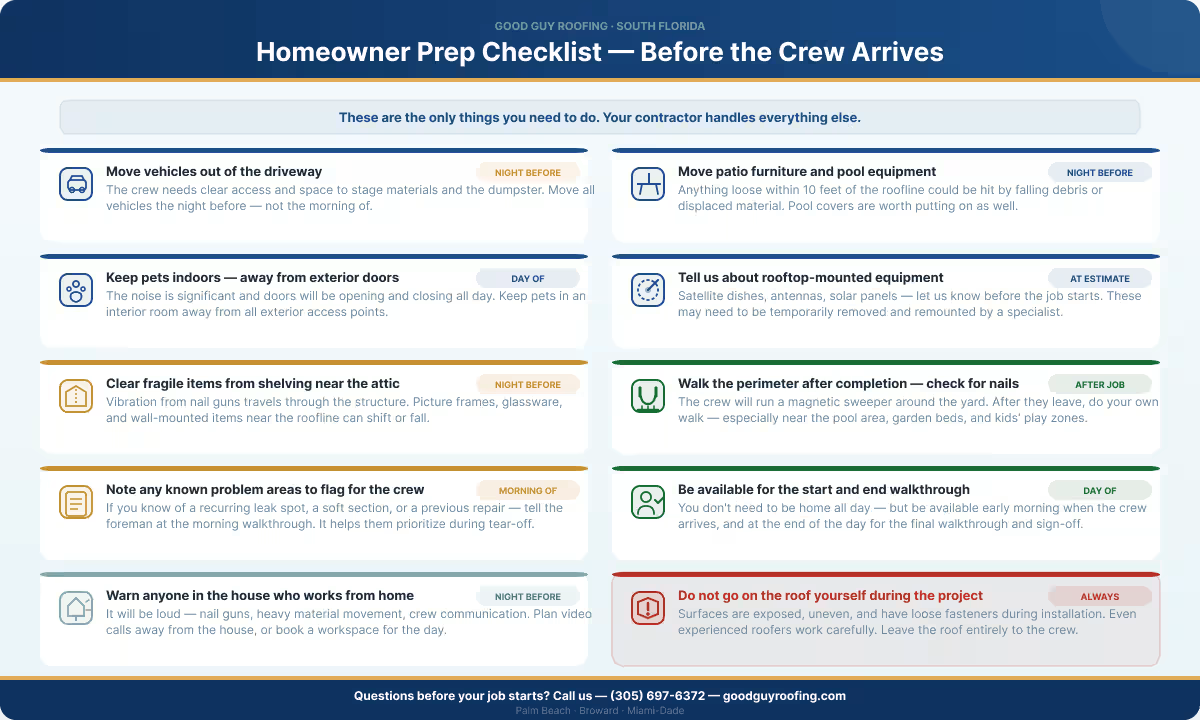
Not for most of the job. You’ll want to be available for the initial walkthrough when the crew arrives, usually early morning, and for a final walkthrough when the job is complete. Beyond those two points, you don’t need to be on-site. The crew will be working on the exterior and won’t need access to the interior of your home in most cases (unless attic access is required for a specific inspection or repair). That said, your car should be moved from the driveway or garage area, and pets should be kept inside and away from exterior doors and windows, the noise and activity can be stressful for animals.
How loud is a roof replacement?
Quite loud. This is worth being honest about. A tile or shingle installation involves pneumatic nail guns, power tools, and the weight of material being moved across the roof surface all day. If you work from home, plan for a day or two of significant background noise. If you have young children who nap during the day, it’s worth flagging the timing with your contractor so they know. The noise is concentrated during working hours; most crews start early (around 7 a.m.) and finish before dark. It is disruptive, but it is temporary.
What happens to my landscaping during roof replacement?
A professional crew will lay down plywood sheets, tarps, or roofing boards around the perimeter of the house before work begins to protect shrubs, plants, and the lawn from falling debris. Gutters are typically removed and reinstalled as part of the job. At the end of the project, the crew runs a magnetic roller (a “magnet sweep”) around the entire perimeter of the property to collect any nails or fasteners that landed in the grass. A thorough crew will also manually inspect around plantings and near pool areas where the magnet may not reach as effectively. When you do the final walkthrough, check these areas yourself; if you find fasteners the crew missed, flag them immediately.
What to Expect From Your Roof Replacement Timeline
A roof replacement has two timelines, and understanding both helps you plan properly.
The installation itself is fast. For most South Florida homes, the crew is on and off your roof within one to three days. The noise, the disruption, the debris management — that part is genuinely brief.
The full project takes longer. From your first call to the permit being officially closed, most straightforward jobs run two to four weeks. Add a permit backlog, a specialty tile order, or a post-storm inspector queue, and you’re looking at four to eight weeks, which is still normal, not a red flag.
The key variables in Florida that you can’t always control:
- Post-storm permit volume: submit early and choose a contractor who tracks the application actively, not one who files and waits
- Inspector scheduling: especially after major events in Miami-Dade and Broward, a good contractor follows up; a passive one waits
- Material availability: Confirm stock early, before the permit is even submitted, so a tile order doesn’t push you past the rainy season window
- Discovered deck damage: adds time and cost, but should always be documented and requoted before work continues, never absorbed silently
The contractors who consistently deliver shorter timelines aren’t the ones who work fastest on the roof; they’re the ones who apply for permits immediately, track inspection requests, and order materials the moment you sign off. That’s what project management in roofing actually means, and it’s what we do on every job across Palm Beach, Broward, and Miami-Dade County.
Every free estimate we provide includes a project timeline tailored to your home, materials, and county. If you’d like to know exactly what to expect — and when — that’s the right place to start.