Roof Replacement Cost in South Florida: Comprehensive Pricing Guide
Your roof replacement cost and potentially getting a new roof are one of the biggest investments a homeowner can make.
And if you live in South Florida, in Palm Beach, Broward, or Miami-Dade County, you already know that the climate here puts roofs through conditions most of the country never sees.
Hurricane-force winds, year-round UV exposure, and relentless humidity all mean your roof works harder than almost anywhere else in the United States.
So when it’s time to replace it, the question every homeowner asks is the same: how much will this cost?
The honest answer is that the cost of replacing a roof in South Florida varies significantly depending on your roof size, the material you choose, your roof’s pitch, local permit requirements, and the contractor you hire.
In fact, the average roof replacement in the United States costs between $8,000 and $22,000, but Florida homes, particularly in South Florida’s high-wind and coastal zones, often fall at the higher end of that range due to stricter building codes and premium material requirements.
This guide breaks it all down clearly. You’ll find real price ranges by material, an explanation of every cost driver, a price-per-square breakdown, and a look at what the actual installation process looks like when Good Guy Roofing replaces your roof. By the end, you’ll have everything you need to make a confident, informed decision.
Ready to skip straight to pricing? Request a same-day written estimate or call (954) 247-9660
What Is The Actual Roof Replacement Cost in South Florida?
Let’s start with real numbers.
Roof replacement cost in Florida is typically quoted either as a total project price or as a price per square, where one “square” equals 100 square feet of roofing. Understanding both gives you a much clearer picture of what you’re paying for.
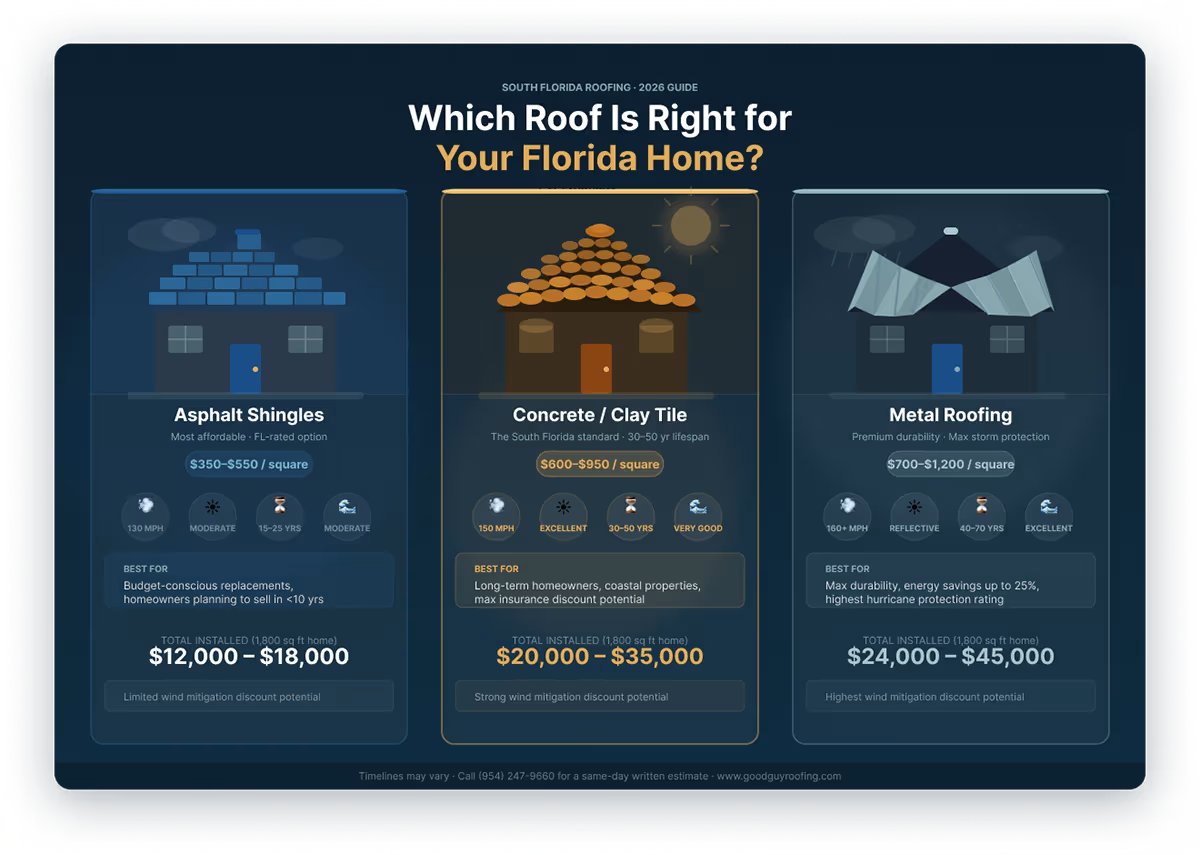
Now, let’s put it into context for a standard South Florida home between 1,500 and 2,500 square feet. Here’s what you can expect to pay across the three most common roofing materials:
| Material | Price Per Square | Avg. Total Cost (1,800 sq ft) | Lifespan in FL |
|---|---|---|---|
| Asphalt Shingles | $350 – $550 | $12,000 – $18,000 | 15 – 25 years |
| Concrete / Clay Tile | $600 – $950 | $20,000 – $35,000 | 30 – 50 years |
| Metal Roofing | $700 – $1,200 | $24,000 – $45,000 | 40 – 70 years |
Please note that these are purely estimates, not final pricing. They’re based on South Florida market conditions. The actual roof replacement cost will vary by roof complexity, pitch, and contractor.
These numbers represent the full installed cost, meaning material, labour, removal of your old roof, disposal, underlayment, and permits.
They are not “materials only” figures. When you see quotes online that seem surprisingly low, they’re often materials-only estimates that don’t reflect what you’ll actually pay at the end of a project.
Asphalt Shingles: The Most Affordable Starting Point
Architectural asphalt shingles remain the most widely installed roofing material in the United States, and they’re a legitimate option for South Florida homes, especially in inland areas away from the coast.
They’re wind-rated up to 130 mph when properly installed and can handle Florida’s heat reasonably well.
The catch is lifespan.
In South Florida’s intense UV environment, standard asphalt shingles can degrade faster than their rated lifespan suggests. Homeowners who plan to sell within 10 – 15 years often find shingles to be the practical choice, while those planning to stay longer frequently opt for tile or metal.
Concrete and Clay Tile: The South Florida Standard
Drive through any neighbourhood in Palm Beach County or Miami-Dade, and you’ll most likely notice that tile roofing is the dominant choice, and for good reason.
Tile is exceptionally durable in Florida’s climate, resistant to salt air corrosion, and holds up well against hurricane-force winds when properly installed to Florida Building Code specifications.
Concrete tile is the more affordable of the two tile options, while clay tile carries a premium price but offers superior longevity and aesthetics. The tradeoff with tile is the upfront cost. A tile roof replacement costs roughly 60 – 90% more to install than asphalt, but over a 40 – 50-year lifespan, the cost-per-year calculation often makes tile the smarter long-term investment.
Metal Roofing: The Premium Long-Term Play
Metal roofing has grown rapidly in South Florida over the past decade, and it’s easy to understand why.
Standing seam metal roofs offer wind resistance ratings that can exceed 160 mph – a meaningful number in a region that regularly sees Category 3 and 4 hurricane conditions. According to the Insurance Institute for Business & Home Safety (IBHS), metal roofs consistently outperform other materials in extreme wind events.
The higher upfront cost is real, but metal roofs also deliver lower long-term maintenance costs, significant energy savings from their reflective properties (ENERGY STAR-rated metal roofing can reduce cooling costs by up to 25%, according to the Oak Ridge National Laboratory), and the longest lifespans of any residential roofing material available today.
Not sure which material is right for your home? Speak with a roofing professional.
The 5 Cost Drivers That Determine Your Final Price
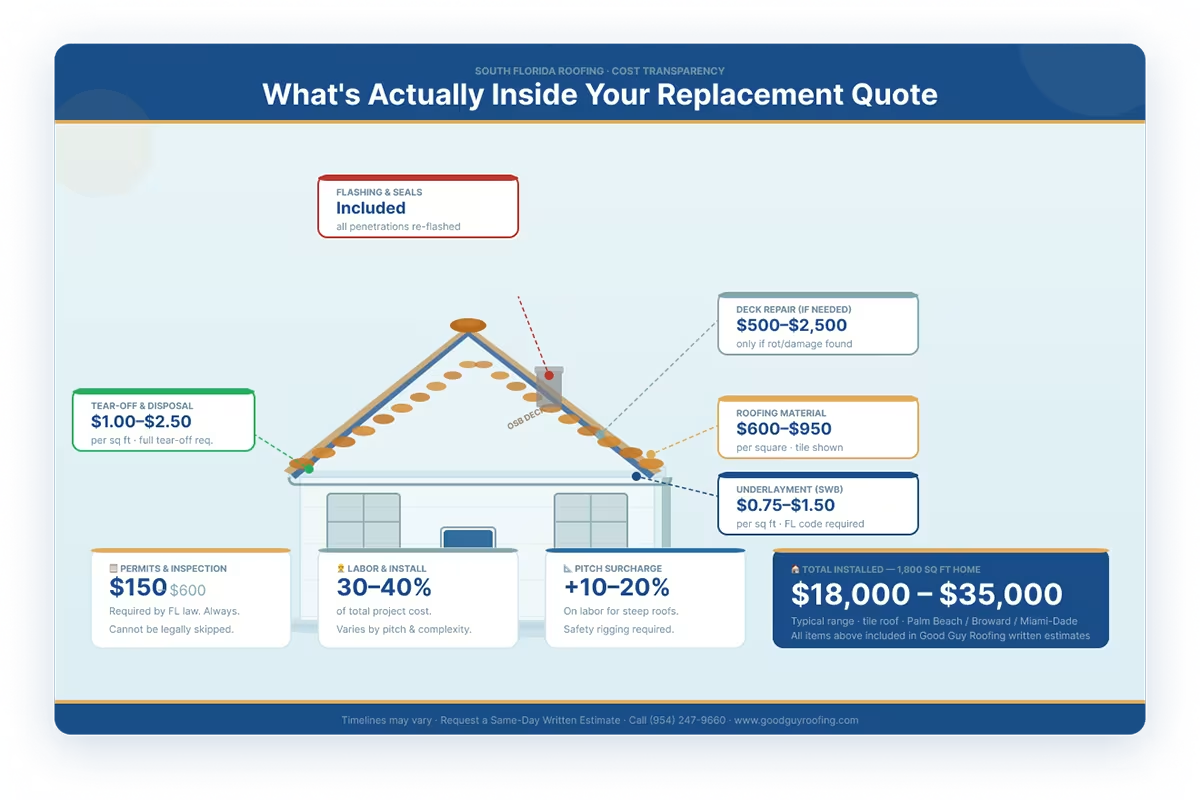
Two homes of the same size can receive quotes that differ by $10,000 or more. Understanding why requires examining the five factors that have the greatest impact on the cost of your new roof.
1. Roof Size and Square Count
Most likely, the biggest variable in any roofing quote is the total area of your roof. It’s measured in squares. A 2,000 sq ft home doesn’t necessarily have a 2,000 sq ft roof. The actual roof area depends on a bunch of factors like the pitch and complexity. A steeply pitched roof over a 2,000 sq ft home can have up to 40% more actual roof surface than the home’s footprint.
2. Roof Pitch
Pitch refers to the steepness of your roof. A flat or low-slope roof is faster and safer to work on. Steeper roofs require additional safety equipment, more time, and sometimes specialty harness systems, all of which add to labour costs.
In South Florida, most homes have moderate to low-pitch roofs, but where steeper pitches exist, particularly in older neighbourhood styles, you can expect a pitch surcharge of up to 20% above base labour costs.
3. Underlayment Requirements
Florida’s building codes are among the strictest in the country, and for good reason. The Florida Building Code (FBC) requires a secondary water barrier (SWB) on all new roof installations in High Velocity Hurricane Zones, which includes all of Miami-Dade and Broward counties and parts of Palm Beach County.
This typically means a self-adhering modified bitumen underlayment that adds $0.75 – $1.50 per square foot to your project cost compared to the standard felt underlayment used in other states. This isn’t an upsell; it’s a code requirement. Any contractor skipping it is creating a liability problem for you.
4. Permits
In Florida, a permit is legally required for any roof replacement. This is non-negotiable. The permit process involves plan review and final inspection by a licensed building official, and it exists to ensure your new roof meets the FBC wind resistance standards required for your zone.
Permit costs vary by county and roof size. Any contractor who offers to “skip the permit to save you money” is putting you at serious risk. Unpermitted work can void your homeowner’s insurance and create significant problems at the time of sale.
5. Tear-Off and Disposal
The Florida building code generally requires a full tear-off of the deck before installing a new roof. You cannot simply layer over an existing roof. This process involves removing the old roofing material, inspecting and repairing the sheathing (deck), and disposing of the debris.
Tear-off adds approximately $1.00 – $2.50 per square foot to your total cost, depending on the number of layers being removed and the material type. If the inspection reveals rotted or damaged decking underneath, deck repairs will add further to the project total – but they’re necessary for your new roof to perform correctly.
| Quick Cost Sanity Check:
For a 2,000 sq ft home (approx. 20 squares of roof) in Broward County, a mid-range tile replacement might break down like this:
Total range: $18,750 – $28,000 before any upgrades or custom work. Keep in mind that these are estimates. |
Material Comparison: What You Get at Each Price Point
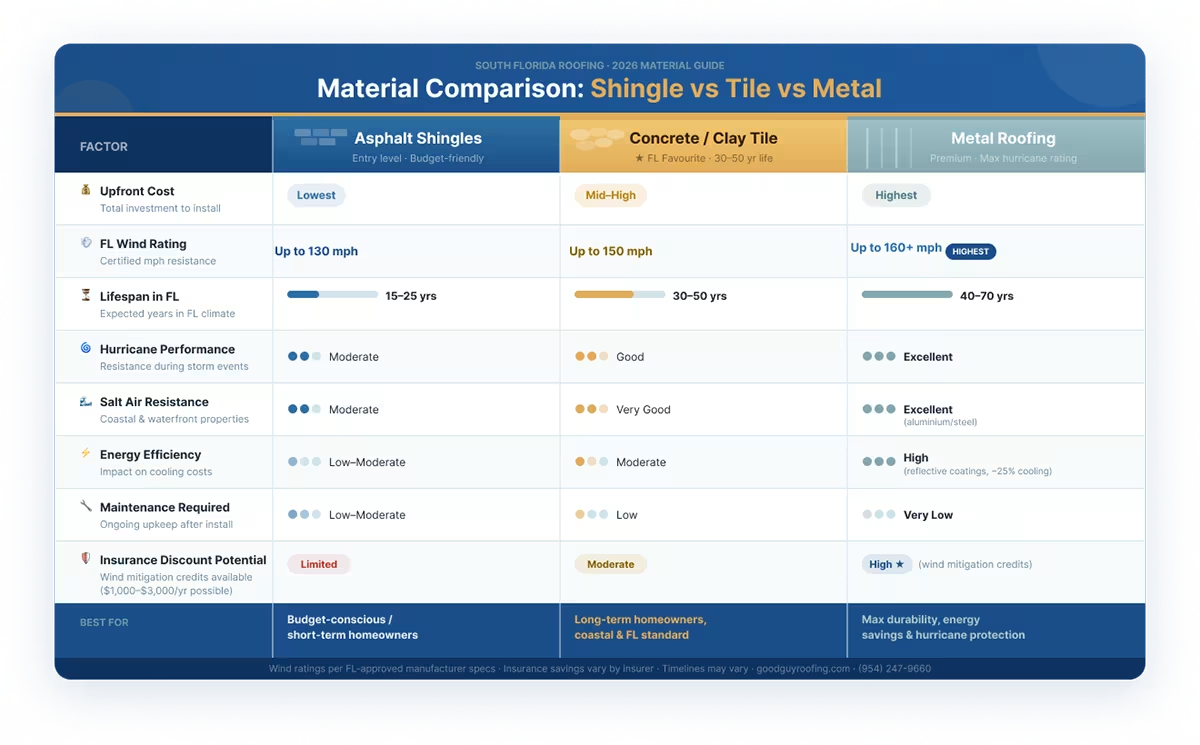
Choosing between shingle, tile, and metal isn’t just a budget decision; it’s a decision about how long you plan to stay in your home, how much ongoing maintenance you’re willing to do, and how your home will look and perform over the next several decades. Here’s a side-by-side comparison built specifically for South Florida conditions.
One factor that’s easy to overlook is insurance. In South Florida, your homeowners insurance premium is heavily influenced by your roof’s age, material, and wind-mitigation rating. A new tile or metal roof with a current wind mitigation inspection report can yield insurance savings of $1,000 – $3,000+ per year, depending on your insurer and location. Over a 10-year period, those savings can meaningfully offset the higher upfront cost of premium materials.
What to Expect During a Roof Replacement
Knowing the cost is one thing. Understanding what actually happens during a replacement helps you plan, set expectations, and make sure the job is done right. Here’s how Good Guy Roofing approaches every roof replacement in South Florida.
Day 1: Pre-Job Prep, Roof Replacement Cost and Material Delivery
Before work begins, your project manager confirms all permit approvals are in place. Nothing starts until the permit is pulled and posted. Materials are delivered and staged. Protective coverings are laid over landscaping, driveways, and any areas adjacent to the work zone. Your neighbours receive a courtesy notice about work hours and dumpster placement.
Day 1 – 2: Tear-Off and Deck Inspection
The existing roofing material is completely removed down to the structural deck. This is the most labour-intensive part of the job and, critically, the moment when hidden problems become visible. Our team inspects every inch of the decking for rot, soft spots, delamination, or water damage. Any compromised sections are replaced before the new roof system goes on – skipping this step is how roof failures happen.
Day 2 – 3: Underlayment and Secondary Water Barrier
In compliance with the Florida Building Code, the secondary water barrier (modified bitumen self-adhering underlayment) is installed across the entire deck. This layer is your last line of defence if any roofing material is compromised during a storm. Flashings are installed or replaced around all roof penetrations – vents, pipes, skylights, and chimneys – using corrosion-resistant metal appropriate for coastal environments.
Day 3 – 5: Material Installation
Depending on your chosen material, the new roof goes on. Shingle installations are typically the fastest. Tile takes longer due to weight and placement requirements. Metal roofing – particularly standing seam – is the most technically demanding and time-consuming, but also the most weather-tight once complete. All materials installed by Good Guy Roofing carry Florida Product Approval status, meaning they’ve been independently tested and certified to meet FBC wind and impact standards.
Final Day: Inspection, Cleanup, and Sign-Off
Once installation is complete, the job site is fully cleaned, including a magnet sweep for nails in your yard and driveway. A final inspection is scheduled with the county building department. You receive a copy of the permit sign-off, your manufacturer’s warranty documentation, and a wind mitigation inspection report that you can submit directly to your insurance company for a premium reassessment.
Most single-family roof replacements in South Florida take between 2 and 5 working days, weather permitting. Complex jobs, large homes, steep pitches, or high-end metal systems may run 7 – 10 days.
Frequently Asked Questions About Roof Replacement Costs
How much does a roof replacement cost in Florida?
In South Florida, covering Palm Beach, Broward, and Miami-Dade counties, a full roof replacement typically costs between $12,000 and $45,000, depending on size, material, and complexity. Asphalt shingles are the most affordable option, starting around $12,000 – $18,000 for an average home. Tile roofs run $20,000 – $35,000. Metal roofing starts at around $24,000 and can exceed $45,000 for premium standing-seam systems on larger homes. Florida’s strict building codes, required secondary water barriers, and mandatory permit process all contribute to costs running higher than national averages.
How many days does a roof replacement take?
Most residential roof replacements in South Florida are completed in 2 to 5 working days. Smaller homes with straightforward shingle replacements can sometimes be finished in a single day. Larger homes, tile systems, or standing-seam metal installations typically take 4-7 days. Factors that can extend the timeline include unexpected deck damage discovered during tear-off, material delivery delays, or mandatory hold periods during the permit inspection process.
Do I need a permit to replace my roof in Florida?
Yes, a permit is legally required for any roof replacement in Florida, without exception. The Florida Building Code mandates that all roofing work be inspected by a licensed building official to verify compliance with wind-resistance and water-barrier requirements. A contractor who offers to skip the permit is exposing you to significant risk: unpermitted work can void your homeowner’s insurance, create issues when selling your home, and leave you personally liable if the roof fails during a storm.
What roofing material lasts longest in Florida?
For South Florida’s specific combination of UV exposure, humidity, salt air, and hurricane risk, metal roofing offers the longest lifespan – typically 40 to 70 years with minimal maintenance. Concrete and clay tile is a close second, with a lifespan of 30 to 50 years and excellent performance in Florida conditions. Asphalt shingles, while serviceable, typically have a shorter effective lifespan in Florida compared to cooler climates – 15 to 25 years is realistic in South Florida’s intense UV environment. The material that “lasts longest” for your specific home also depends on proper installation, ventilation, and maintenance.
Does financing increase the total roof replacement cost?
Yes, if you carry a balance past any interest-free promotional period, financing does add to the total amount paid. The size of that increase depends on the interest rate, the loan term, and whether you pay ahead of schedule. However, for many homeowners in South Florida, the alternative, delaying a necessary roof replacement, often results in higher costs through emergency repairs, water damage, mould remediation, or a full replacement under worse circumstances. Financing can make a planned, properly installed replacement financially accessible right now. Ask us about our current financing options, and we’ll walk you through the numbers honestly.
Ready to Get a Real Roof Replacement Cost for your Home?
The best way to know exactly what your roof replacement will cost is to get a written estimate based on your specific home. At Good Guy Roofing, we provide same-day written estimates with no pressure and full transparency on every line item, material, labor, permit, underlayment, and disposal, all itemised separately.
We serve homeowners across Palm Beach County, Broward County, and Miami-Dade County, and we’re fully licensed, insured, and compliant with all Florida Building Code requirements.
Request a same-day written estimate or call (954) 247-9660