
How Often Should You Get a Roof Inspection in Florida? (And What’s Included)
How often do you actually think about roof inspection? Here’s something most homeowners only discover after the fact: roof damage rarely looks like roof damage. Not at first, anyway.
What it looks like is a water stain that appeared on your ceiling after the last storm. Or a damp patch in the corner of an upstairs room. Or maybe your energy bills crept up a little, and you couldn’t quite figure out why. By the time it’s obvious enough to act on, the damage has usually been building for months, sometimes longer.
That’s the whole problem with roofs. They do their job quietly, out of sight, and when something goes wrong, it tends to stay hidden until it gets expensive.
A professional roof inspection changes that equation. It gives you visibility into what’s actually happening up there, before a minor issue becomes a major bill. And in Florida specifically, where the climate puts roofs through more stress than almost anywhere else in the country, that visibility matters more than most people realise.
So, how often should you actually be getting your roof inspected? What does an inspection involve? And is the free inspection offer that some contractors advertise genuinely free, or is there a catch?
Let’s go through all of it. Want to skip straight to booking? Book a free roof inspection
Why Florida Roofs Need More Attention Than Most
It’s not uncommon to say that Florida is one of the hardest environments for a roof to operate in. The combination of factors here is genuinely unusual.
Start with the sun. Florida gets more hours of direct sunlight per year than nearly any other state, and that UV exposure degrades roofing materials faster than cold or temperate climates ever could.
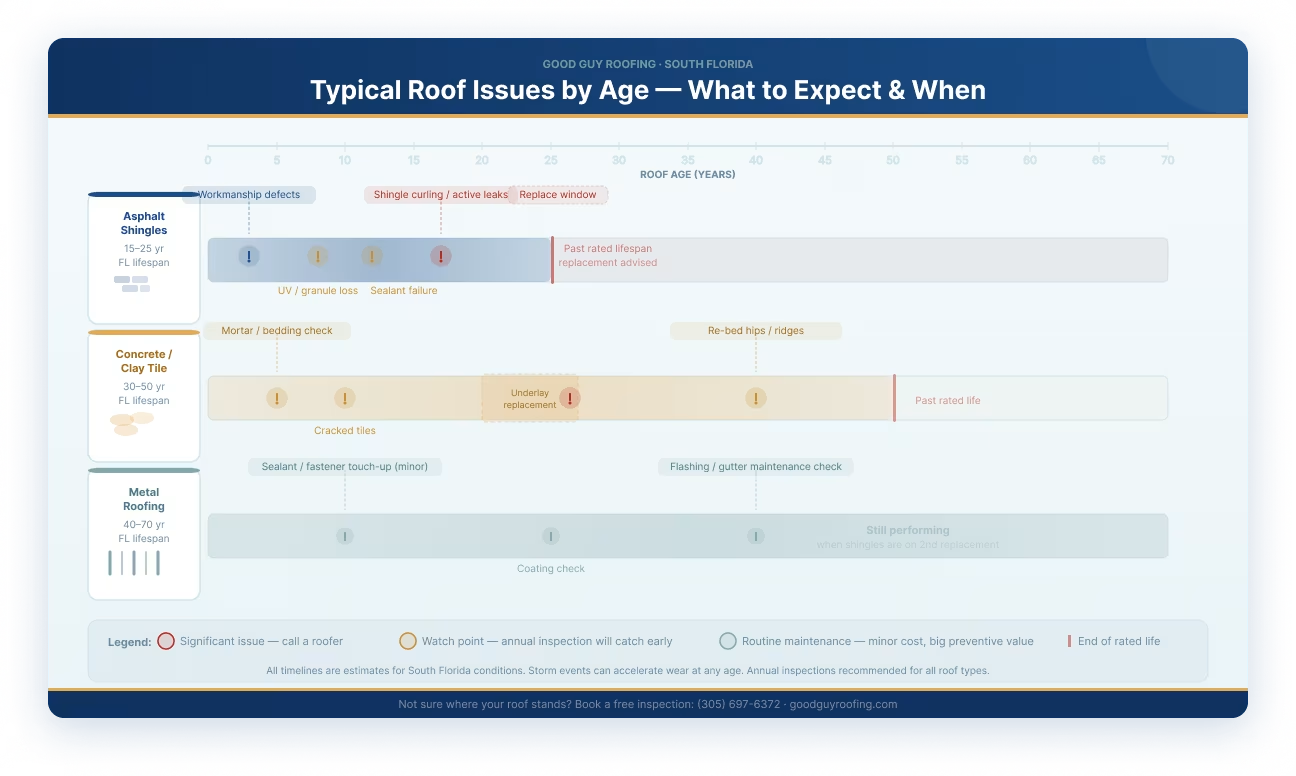
Asphalt shingles that might last 30 years in the Northeast will typically show meaningful wear in 15 to 20 years here. That’s not a quality issue; it’s just physics.
Then there’s the humidity. Florida’s air holds moisture year-round, and that moisture finds its way into every gap, every failed sealant, every slightly lifted tile. Once water gets into the structure beneath the roofing material, the clock starts on mould, rot, and insulation damage, none of which are cheap to fix.
Hurricane season runs from June through November, and even storms that don’t make direct landfall can put significant wind stress on roofs across the region. High winds create uplift, a negative pressure phenomenon that literally tries to pull the roof away from the structure, and even well-installed roofs can develop vulnerabilities after a major wind event that aren’t visible from the street.
Finally, for coastal homeowners in particular, salt air accelerates the corrosion of any exposed metal components: flashings, fasteners, and vent covers. This is a slow but consistent process.
All of this is to say: a Florida roof isn’t just sitting there waiting to be inspected every few years as a formality. It’s actively dealing with conditions that will, over time, find any weakness. Regular inspections are how you find those weaknesses first.
How Often Should You Get a Roof Inspection?
It all depends on your roof. Factors to consider include age, material, recent weather history, and your proximity to the coast, all of which affect the right cadence. Here’s a practical guide.
| Roof type/age | Recommended frequency | Why |
| New roof (0–5 years) | Once a year | Installation defects and early workmanship issues tend to surface in the first few years. Catching them early is far cheaper. |
| Shingles, 5–15 years | Once a year, plus after major storms | UV degradation is actively happening. Annual checks catch granule loss, sealant failure, and lifted sections before they become leaks. |
| Shingles, 15+ years | Twice a year | You’re in the home stretch of the roof’s lifespan. Inspection every six months helps you plan ahead and avoid emergency replacements. |
| Tile roof, any age | Once a year + after storms | Individual cracked tiles are the main failure point. They’re easy to miss from the ground and easy to fix early — but not once water gets underneath. |
| Metal roof, any age | Once a year | Metal is low-maintenance but not zero-maintenance. Flashings, sealants around penetrations, and fastener checks are the main focus. |
| Any roof, after a named storm | Immediately | Even if your roof looks fine from the street, wind and debris can cause damage that only shows up in the next rain. Get it checked. |
| Any roof, before selling | Pre-listing | A current inspection report helps in negotiations and can prevent last-minute surprises during buyer due diligence. |
The single most important rule is that after any named storm, get your roof checked, regardless of what you can see from the ground. This is the one that catches people out most often. You walk outside after a hurricane or tropical storm, take a look around, and everything seems fine. No obvious missing tiles, no gaping holes. So you move on.
But wind damage often doesn’t look dramatic. A few lifted shingles, a small section of flashing that’s slightly separated from the surface, a cracked tile that’s still sitting in place, none of these are visible from street level, and all of them will let water in during the next rain. That next rain might be two weeks away. Or it might be that afternoon.
| A note on insurance claims:
If you intend to make an insurance claim after storm damage, getting a professional inspection documented quickly is important. Insurers process claims in order, and adjusters are stretched thin after major events. The sooner you have a professional assessment in hand, the stronger your position in the claims process. |
What Does a Roof Inspection Actually Include?
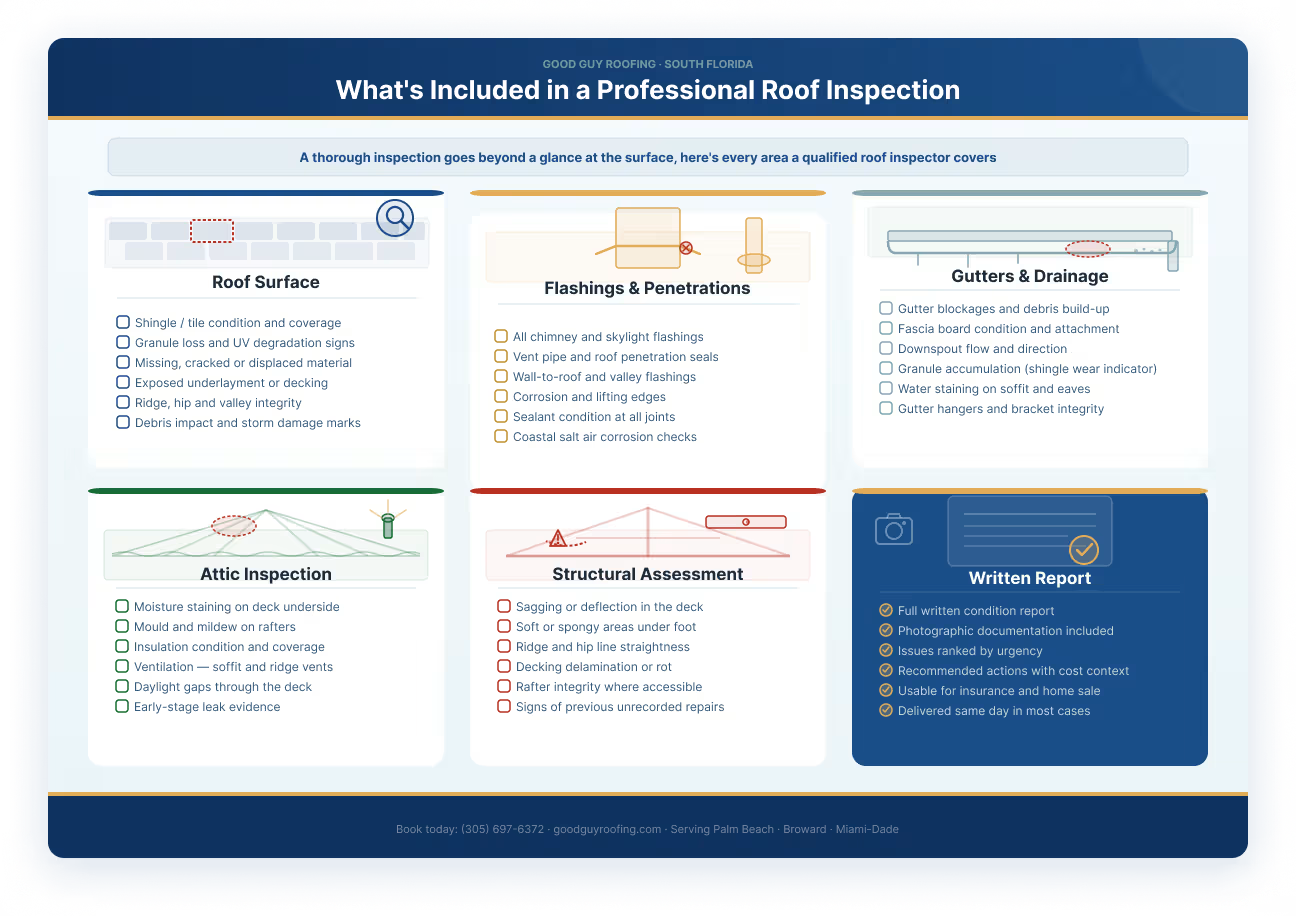
This is where much of the confusion lies. People picture someone walking around on the roof for a few minutes, maybe poking at a tile here or there, then handing over a piece of paper. A professional inspection from a qualified contractor is considerably more thorough than that.
Here’s what a proper inspection covers, and why each part matters.
The Roof Surface
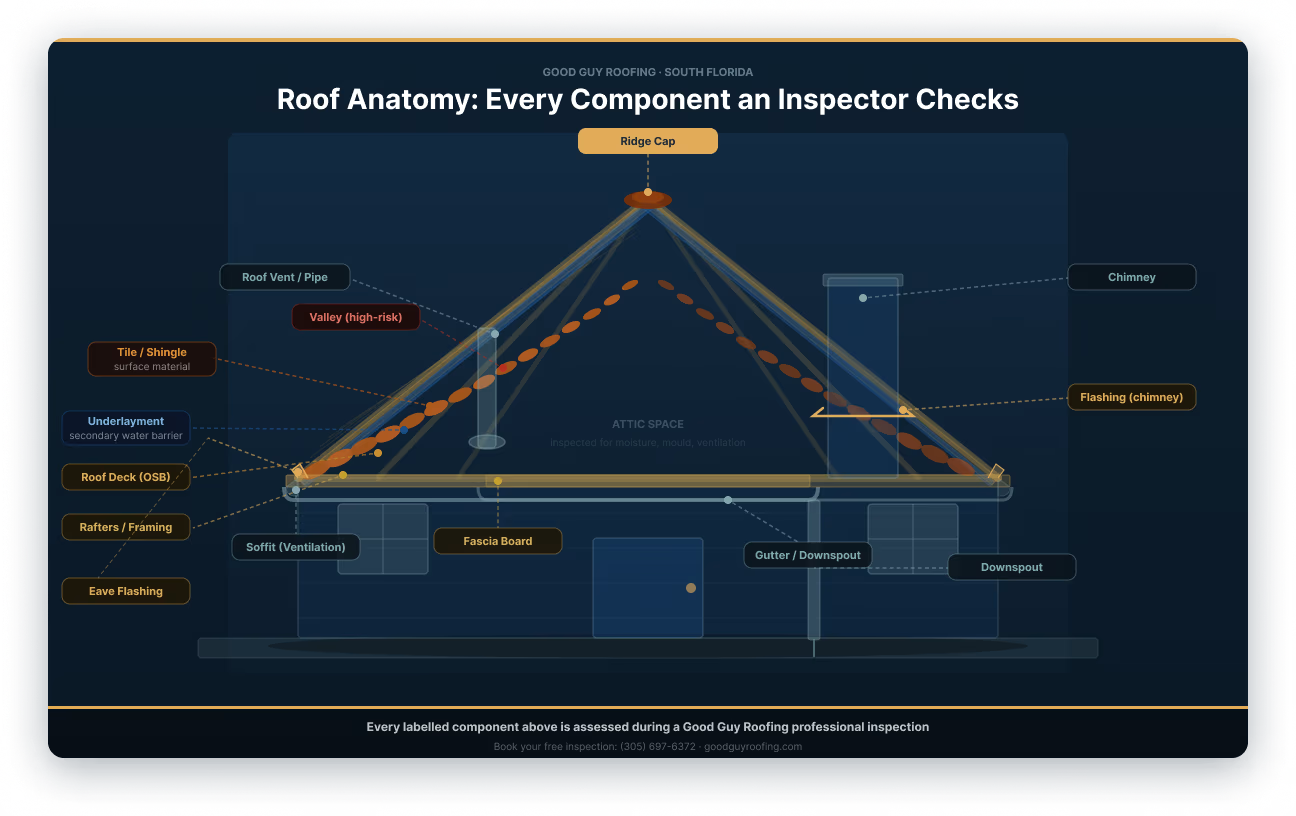
This is the most visible part of the inspection, but that doesn’t mean it’s simple. A trained eye will assess the entire surface systematically, not just doing a quick scan. For shingle roofs, that means checking for granule loss, curling or cupping edges, cracked or missing shingles, and any areas where the underlying felt or deck is exposed. For tile roofs, the focus is on cracked, chipped, or displaced tiles, and the condition of the mortar bedding at ridges, hips, and valleys. For metal roofs, the inspector will look for dented panels, damaged seams, and any areas where the coating has worn through.
Each material tells a different story, and a good roof inspector knows what to look for in each.
Flashings and Sealed Penetrations
Flashing is the metal strip used to seal joints around anything that penetrates the roof, such as chimneys, skylights, vents, pipes, and roof-to-wall transitions. It’s also one of the most common failure points on any roof.
Over time, flashings can corrode, pull away from the surface, or lose their sealant. This happens gradually, which is why it’s easy to miss. A good inspection will check every flashing point individually, not just the obvious ones. A chimney with even a small gap in its flashing can allow a significant amount of water to enter the structure during a heavy rainstorm.
Gutters and Drainage
Gutters are part of the roof system, not separate from it. Clogged or damaged gutters don’t just back up; they can force water under the roofing material at the eave edge, cause the fascia board to rot, and, in extreme cases, pull away from the structure entirely. During an inspection, the gutters and downspouts will be checked for blockages, damage, and whether they’re correctly directing water away from the foundation.
For asphalt shingle roofs, gutters also provide useful diagnostic information: a significant accumulation of granules in the gutter is a sign that the shingles are degrading faster than expected.
The Attic
This is the one that surprises most homeowners. A thorough roof inspection doesn’t stop at the surface; it includes the attic space beneath the roof.
The attic is where early-stage leaks and condensation problems first become visible. Dark staining on the underside of the decking, damp insulation, and mould growth on rafters are all signs of moisture problems that may not yet show up inside the living space. Catching them here, while they’re still contained to the attic, is dramatically cheaper than waiting for them to work their way through.
Attic ventilation is also assessed during this part of the inspection. Blocked soffit vents or inadequate ventilation cause heat and moisture to build up in the attic space, which accelerates the degradation of roofing materials from the inside out and can contribute to mould growth over time.
Structural Integrity Assessment
A visual assessment of the roof structure itself, the decking, rafters, and sheathing, is part of any thorough inspection. The inspector will look for areas of the roof that have changed shape: sagging sections, areas that feel soft underfoot, or visible deflection in the ridge or valleys. These can indicate decking damage from moisture, or in more serious cases, structural loading issues.
A Written Report
At Good Guy Roofing, every inspection concludes with a written report. Not a verbal summary, not a handshake — a document. It covers the current condition of the roof, any issues found, our recommended actions, and the urgency of each. This report has practical value beyond just knowing the state of your roof: it can be used as part of an insurance claim, in a home sale disclosure, or as a baseline for a future inspection.
| Get a Same-Day Written Estimate After Your Inspection |
Signs You Shouldn’t Wait for the Next Scheduled Inspection
Inspection schedules are a sensible framework for maintenance. But roofs don’t always wait for schedules. Here are the signs that something needs attention now, regardless of when you last had an inspection.
- Water stains appearing on ceilings or walls. Even a small, faint stain should be taken seriously. If it’s there after rain, it’s an active leak. If it’s dried and discolored, it was an active leak. Either way, it didn’t heal itself.
- Visible shingles or tiles in your yard or garden. After a storm, especially. If roofing material has come off the roof, there’s now an exposed area.
- A musty smell in upper rooms or the attic. Musty means moisture. Moisture in a roof structure means something has been getting in long enough to create a hospitable environment for mould.
- A sudden spike in your energy bills. If your air conditioning is working harder than usual, it might be because conditioned air is escaping through gaps in the roof system, or because moisture damage to the insulation has reduced its effectiveness.
- Daylight visible in the attic. If you can see light coming through gaps in the roof structure during the day, water can definitely get through those same gaps when it rains.
- Your roof is over 15 years old and has never been inspected. This one goes without saying, but if you’re not sure when your roof was last looked at, or if you recently bought a home and don’t have inspection records, now is a good time.
Inspections and Insurance: A Relationship Worth Understanding
Florida’s homeowner’s insurance market is, to put it diplomatically, complicated. Premiums are among the highest in the country, coverage disputes after storm events are common, and many insurers in recent years have become more aggressive about requiring roof inspections or limiting coverage based on roof age.
Understanding where roof inspections fit into this picture is genuinely useful.
Wind Mitigation Inspections
A wind mitigation inspection is a specific type of roof inspection, distinct from a standard condition assessment, that evaluates how well your roof system is built to resist hurricane-force winds. It assesses things like the roof-to-wall connection method, the secondary water barrier, the roof deck attachment pattern, and the type of opening protection on the home.
The results of a wind mitigation inspection are submitted to your insurer using a standardized form, and if your roof scores well, you can receive significant discounts on your premium — sometimes in the range of $1,000 to $3,000 or more per year. A newly installed roof that meets current Florida Building Code standards will almost always score well. If your roof was replaced recently and you haven’t had a wind mitigation inspection done, there’s a real chance you’re overpaying for insurance.
After a Storm: Documentation Matters
If a storm damages your roof and you want to file a claim, the inspection report is your foundational document. It establishes what the damage is, where it is, and that it occurred as a result of the storm rather than pre-existing wear. The more thorough and professionally documented this report is, the stronger your position when dealing with an adjuster.
One thing worth knowing: adjusters working a major storm event across multiple counties are under significant time pressure. They’re not always able to spend as long on each property as you might hope. Having a detailed written report from a licensed roofing contractor, especially one that includes photographs and specific descriptions of damage, can fill in the gaps and ensure nothing is missed.
| Quick tip:
If you can get a roofing professional present during the insurance adjuster’s visit, do it. This is your right as a homeowner, and it makes a material difference. A contractor who can point to and explain specific damage in technical terms will be taken seriously in a way that a homeowner describing the same damage will not. |
Frequently Asked Questions
Are roof inspections really free?
Yes, at Good Guy Roofing, the inspection itself is genuinely free with no strings attached. You’ll receive a full written report on the condition of your roof, and if we find issues, we’ll explain exactly what they are and what your options are. We don’t pressure anyone into immediate repairs or replacement. The logic is simple: we’d rather earn your trust with an honest assessment than push a sale on someone who isn’t ready for one. If you do need work done and want us to do it, we’ll provide a written estimate. If not, the inspection report is yours to keep and use however you need.
How long does a roof inspection take?
For a standard single-family home, plan on roughly 45 minutes to an hour and a half. The actual time depends on the size and complexity of the roof, whether there’s attic access, and whether any issues require closer examination. A roof with multiple levels, skylights, and a complex drainage layout will take longer than a straightforward gable roof on a smaller home. After the inspection itself, you’ll typically receive the written report within 24 hours, though in many cases, we can walk you through the main findings on the day.
What does a roof inspection include?
A thorough inspection covers the full roof surface (shingles, tiles, or metal panels, depending on your roof type), all flashing points around chimneys, vents, skylights, and wall junctions, the gutters and downspouts, the attic space for signs of moisture or ventilation issues, and a visual structural assessment of the decking and framing where accessible. Everything found is documented in a written report with descriptions and photos. What it doesn’t include is an invasive or destructive examination — we’re not pulling up tiles or cutting into decking. It’s a professional visual assessment by someone who knows exactly what to look for.
Do I need a roof inspection after every storm?
After any named tropical storm or hurricane that tracked within a reasonable distance of your property, yes, it’s worth having the roof checked even if it looks fine from the ground. Wind damage and debris impact can cause issues that aren’t visible without a closer look, and those issues tend to make themselves known during the next heavy rain rather than during the original storm. For regular thunderstorms and typical Florida summer weather, you don’t need an inspection every time — but if you notice anything after a storm, even something minor like granules in the gutter or a tile that looks slightly out of place, call us, and we’ll take a look.
Can a roof inspection help with insurance claims?
It can, and often significantly. A professional inspection report provides documented evidence of the damage, its location, and its likely cause, which is exactly what an insurer needs to process a claim. The report also establishes a baseline: if your roof was in good condition before the storm and has specific damage after it, that’s a much cleaner claim than one where the pre-storm condition is unknown. If you’re going through the claims process, it’s also worth knowing that you have the right to have a contractor present when the insurance adjuster inspects the property. Having a professional there who can speak to the damage in detail often results in a more thorough assessment.
Partner With Us for Your Next Roof Inspection
Roof inspections aren’t just about finding problems. They’re about knowing what you’re working with. Whether your roof has ten years left in it or two, knowing that — clearly, with documentation — lets you make better decisions. You can plan financially, negotiate more confidently when selling, make smarter choices about repairs versus replacement, and sleep better during hurricane season.
We inspect roofs across Palm Beach County, Broward County, and Miami-Dade County. The inspection is free. The written report is included. There’s no obligation.
If you’ve been putting it off, now is genuinely a good time. Book a free roof inspection or get a same-day written estimate


