Roofing Permits in South Florida: When You Need One, Costs, and the Process
Roofing permits are one of those things that most homeowners never think about until they suddenly have to. Maybe a contractor just told you they’ll need to pull a permit before starting work. Maybe you’re selling your house and the buyer’s inspector flagged an unpermitted roof. Or maybe you’re just trying to figure out whether the repair you need actually requires one.
Whatever brought you here, the answer is almost always the same: in South Florida, permits are more than a formality. They’re how the state verifies that the work on your home meets the building codes designed to protect it and you during hurricane season. Skipping that process isn’t just a bureaucratic shortcut. It can void your insurance, create legal problems, and make your home harder to sell.
This guide covers what you need to know. It explains when you need a permit. It lists costs in Miami-Dade, Broward, and Palm Beach counties. It also explains the inspection process. It covers what happens if someone skips it.
We also handle all of this on behalf of our clients, so if you’d rather just hand it off, that’s an option too.
Why Are Roofing Permits Such a Big Deal in Florida?
Most states require permits for significant construction work. Florida goes further than most states, and there is a reason.
The state sits where some of the nation’s worst weather meets.
Poor roofing work can lead to catastrophic damage.
The modern Florida Building Code (FBC) was largely shaped by Hurricane Andrew in 1992, a Category 5 storm that devastated South Florida and exposed how poorly many homes had been built. The construction industry was deregulated, inspections were lax, and thousands of homes failed under wind loads they should have been able to handle. Andrew changed all of that.
Today’s FBC is among the most rigorous in the country. Miami-Dade County takes it even further with its own independent approval system for roofing materials; the Miami-Dade Notice of Acceptance (NOA), which requires independent testing before a product can legally be installed within the county. It’s not enough for a material to meet national standards; it has to meet Miami-Dade’s standards specifically.
Permits exist to ensure all of this actually happens in practice, that the materials used, the installation method, and the finished product all conform to the code. The inspection that follows a permitted job is the state’s mechanism for verifying that someone with authority has actually checked the work.
That verification matters for insurance, for resale, and for whether your roof actually does what it’s supposed to do when a storm comes through.
When Do You Actually Need a Permit?
This is the most common question, and the answer has some nuance. The short version: any roof replacement requires a permit in Florida without exception. Repairs depend on the scope of work.
Full Roof Replacement: Always Requires a Permit
If your entire roof or any section that crosses the 25% threshold is being replaced, a permit is required by state law. This applies no matter the roofing material or the home’s age. It also applies whether insurance pays or you pay.
There is no scenario in which a full reroof in Florida is legally permitted without pulling a permit first.
The 25% rule is worth knowing.
The Florida Building Code states the following.
If you replace more than 25% of a roof within 12 months, you must bring the entire roof up to the current code. This means a series of smaller repair jobs that collectively exceed that threshold can trigger a full permit requirement and a full code-compliance upgrade, even if no individual job would have on its own.
Repairs: It Depends on the Scope
Minor repairs, such as replacing a few broken tiles, resealing flashing, or patching a small area, generally don’t require a permit in most Florida jurisdictions. But the threshold varies by county and municipality, and it’s lower than most people expect.
A repair that includes structural work usually needs a permit. This can include replacing damaged decking, fixing rotted rafters, or adding new chimney flashing.
So does any repair that involves a material change (switching from shingles to tile, for example, even in a small area).
The safest approach is always to ask your contractor. A licensed roofer who knows the local requirements will tell you upfront whether the work you need triggers a permit. If they don’t mention it, or if they suggest skipping it “to keep costs down,” that should raise an immediate flag.
| The honest rule of thumb:
If the work costs more than a few hundred dollars and involves anything beyond surface-level cosmetic repairs, assume a permit is required and confirm with your contractor. The cost of pulling a permit is minimal compared to the cost of dealing with unpermitted work later. |
How Much Does a Roofing Permit Cost in South Florida?
Permit fees in Florida are set by the local building department, not the state, which means they vary by county and sometimes by municipality within a county. Fees are typically calculated as a percentage of the project’s estimated value, with minimum and maximum caps in place.
Here’s a general guide to what you can expect across the three main South Florida counties:
| County | Typical permit fee | Processing time | Notes |
| Miami-Dade County | $150 – $600+ | 3–10 business days (online); longer for complex projects | Strictest standards in the state. Miami-Dade Product Approval required for all roofing materials. |
| Broward County | $120 – $500 | 5–10 business days typical | E-permitting available. Fees calculated on project value. Municipalities within Broward may add their own requirements. |
| Palm Beach County | $100 – $450 | 5–15 business days | Unincorporated areas permit through the county; incorporated cities (Boca Raton, West Palm Beach, etc.) have their own building departments. |
Fees are approximate and subject to change. Always confirm current fees with your local building department or ask your contractor.
A few things worth noting about these numbers. First, the permit fee is a small fraction of the overall project cost. For example, on a $20,000 roof replacement, a $400 permit fee is 2%.
Second, in most cases your roofing contractor pulls the permit on your behalf and includes the fee in the project cost, so you won’t be handling it separately.
Third, some municipalities within these counties have their own building departments with their own fee schedules, cities like Boca Raton, West Palm Beach, Fort Lauderdale, and Coral Gables all operate their own permitting systems.
We handle the permit application, fees, and all county paperwork on your behalf.
No trips to the building department. No chasing approvals. The permit fee is included in your written estimate — one less thing to think about.
The Permit Process: Step by Step
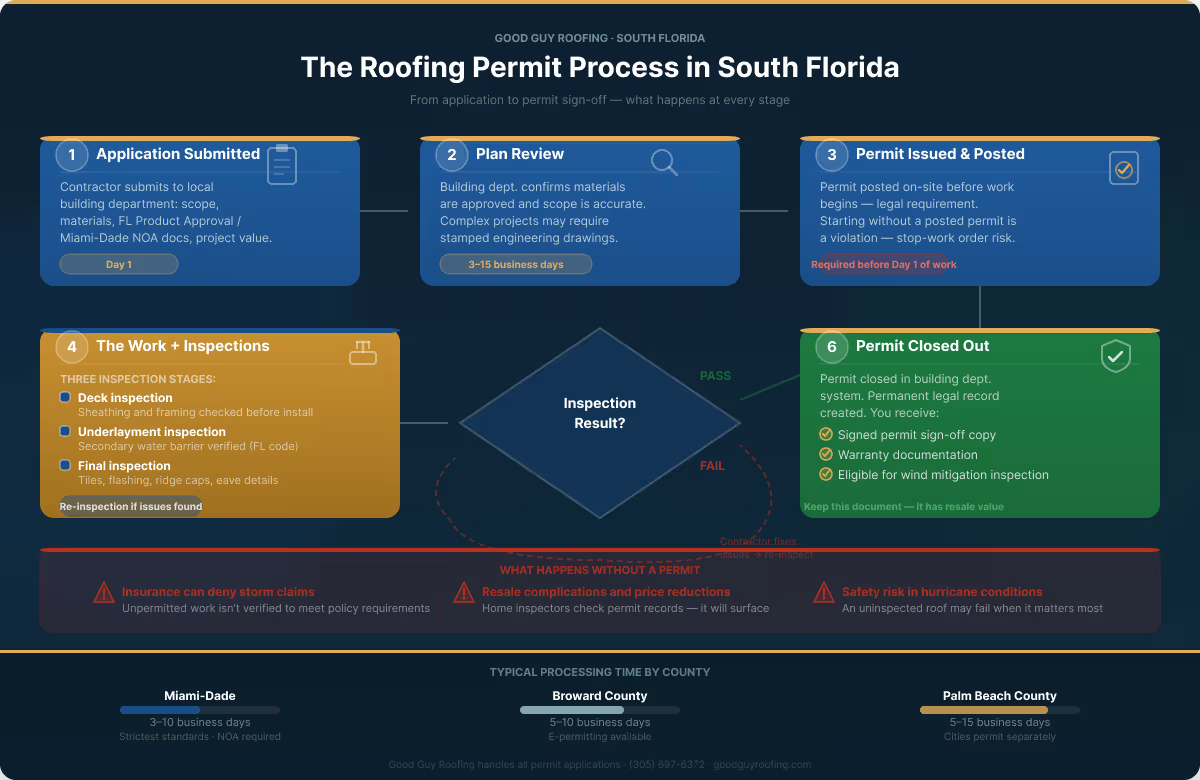
If you’re having a licensed contractor do the work, which is always the recommendation, they will manage the permit process for you. But understanding what’s happening and why helps you ask the right questions and know what to expect.
Step 1: Application
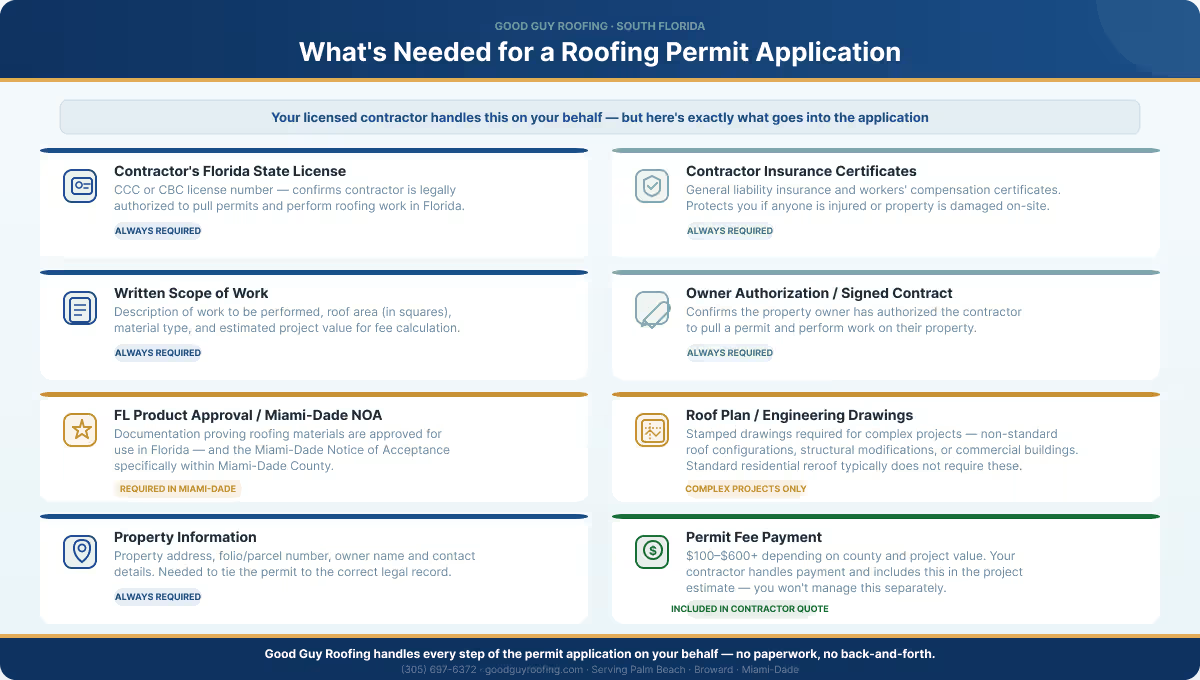
The contractor submits a permit application to the local building department, typically including a description of the work, the materials to be used (with their Florida Product Approval or Miami-Dade NOA documentation where required), and the project value. Most South Florida counties now accept permit applications online through e-permitting portals, which has significantly reduced processing times.
Step 2: Plan Review
For straightforward residential reroof jobs, plan review is often minimal — the building department confirms the materials are approved and the scope matches what’s described. For more complex projects, larger commercial buildings, structures with unusual roof configurations, or projects requiring structural modifications, plan review takes longer and may require stamped engineering drawings.
Step 3: Permit Issuance
Once approved, the permit is issued and must be posted on-site before work begins. This is a legal requirement. Anyone who starts work before a permit is posted, even if the application is in progress, is technically in violation, and the building department can issue a stop-work order.
Step 4: The Work
Roofing work proceeds according to the permitted scope. If anything changes during the job, additional damage discovered, materials substituted, scope expanded, the contractor is responsible for updating the permit to reflect those changes. Changes made without amending the permit can create compliance problems at inspection.
Step 5: Inspection
Once the work is complete, the contractor schedules a final inspection with the building department. A licensed building inspector visits the site, examines the work, and either approves it or identifies items that need correction. If corrections are required, a re-inspection is scheduled after the issues are addressed.
The inspection process for roofing in South Florida typically includes:
- Deck inspection: Before the new roofing material is installed, the inspector checks the condition of the sheathing and structural deck looking for rot, soft spots, or improper fastening.
- Underlayment inspection: Florida code requires a secondary water barrier (SWB) in High-Velocity Hurricane Zones, the entire coastal area. The inspector confirms the correct underlayment is installed and properly secured before tile or shingles go on.
- Final inspection: Once the surface material is installed, the inspector reviews the completed roof, tile placement, ridge caps, flashing at all penetrations, and eave details.
Step 6: Final Sign-Off
When the inspection passes, the permit is closed out, and the record is updated in the building department’s system. This creates a permanent record that the work was done legally and inspected by a licensed official. You’ll receive a copy of the permit sign-off, which is a document worth keeping. It has direct value when you sell or make an insurance claim.
| Wind mitigation inspection:
After a permitted roof replacement, you’re eligible to commission a wind mitigation inspection, a separate assessment that evaluates how well your new roof is built to resist hurricane-force winds. The results are submitted to your insurer and can qualify you for significant premium discounts, often $1,000 – $3,000 or more per year. Ask your contractor about scheduling this once the permit is closed. |
What Happens If Roofing Work Is Done Without a Permit?
This section is important. Unpermitted roofing work in Florida isn’t just a technical violation,it creates a set of real, practical problems that can follow you for years.
Insurance Coverage
If your roof was replaced or significantly repaired without a permit, your homeowner’s insurance company can deny claims related to roof damage. The reasoning is straightforward: unpermitted work hasn’t been verified to meet the code required for your policy to apply. This can come up at the worst possible moment, in the middle of a storm claim when you’re already dealing with damage.
Some insurers conduct their own roof inspections when policies are renewed, particularly as roofs age. If unpermitted work is identified at that point, the insurer may cancel coverage or refuse to renew until the issue is resolved. In Florida’s already-challenging insurance market, losing coverage is not a position you want to be in.
Resale
Unpermitted roofing work almost always surfaces during the sale of a home. Buyers commission home inspections, and a home inspector who sees a roof that was replaced without a permit or notices inconsistencies between the permit record and the actual roof will flag it in their report. This can kill a deal, force a price reduction, or require you to retroactively permit and potentially repair the work before closing.
In Florida, sellers are legally required to disclose known material defects. A roof with unpermitted work is a known defect. Failing to disclose it exposes you to legal liability after the sale, even if the buyer’s inspection missed it.
Safety
The most fundamental reason permits exist is safety. An uninspected roof that was installed incorrectly may look normal from the street. It may fail badly during a major storm due to wrong fasteners, weak underlayment, or poorly set tile. The inspection process is the mechanism that catches these problems while they’re still fixable.
| A note on retroactive permits:
If you discover that previous work on your home was done without a permit, it’s possible in many jurisdictions to apply for a retroactive or “after-the-fact” permit. This typically involves an inspection of the existing work and may require portions of the installation to be opened up for review. It’s more expensive and more disruptive than pulling the permit the right way to begin with, but it’s better than leaving the issue unresolved. |
Why Working with a Licensed Contractor Matters
All of this comes back to contractor selection. A licensed Florida roofing contractor is legally responsible for pulling the required permits before starting work. It’s not optional, and it’s not something they can pass off to you as the homeowner’s problem.
If a contractor suggests you “handle the permit yourself” or recommends skipping it entirely, that’s a serious red flag; they’re either unlicensed, unaware of the requirements, or asking you to take on liability that is properly theirs.
At Good Guy Roofing, we handle every permit application, coordinate all required inspections, and don’t start work until the permit is issued and posted.
We also handle the final closeout and provide you with a copy of the permit sign-off for your records. You don’t need to think about any of it — that’s what a licensed contractor is supposed to do.
Frequently Asked Questions
Do I need a permit for roof repairs in Florida?
It depends on the scope. Minor repairs like patching a small area, replacing a few tiles or shingles, resealing existing flashing generally don’t require a permit in most Florida jurisdictions. But repairs that involve structural work, material changes, or that collectively replace more than 25% of the roof within a 12-month period almost certainly do. The rules vary by county and municipality, so if you’re unsure, ask your contractor before the work starts. A licensed roofer will know what applies in your specific location and will tell you upfront. If they’re not bringing it up, ask directly.
How much is a roofing permit in Florida?
Permit fees across South Florida typically run between $100 and $600 for a standard residential reroof, depending on the county, the municipality, and the value of the project. Miami-Dade tends to run higher due to its more stringent requirements. Broward and Palm Beach County are generally in a similar range, though cities within those counties may have their own fee schedules. Most contractors include the permit fee in their overall project estimate, so it rarely shows up as a separate line item you’d handle yourself. If you’re getting a quote and permit costs aren’t mentioned at all, ask, a reputable contractor will have a clear answer.
How long does it take to get a roofing permit in Florida?
For a standard residential reroof, processing typically takes 3 to 15 business days, depending on the county and the current workload at the building department. Miami-Dade can be faster than that for simple jobs submitted through its online system; Palm Beach County tends to run a little longer. After a major storm event, when dozens of contractors in the area are submitting permits simultaneously, processing times can stretch significantly. This is another reason not to wait too long after storm damage to start the process. The permit is one of the first things your contractor should be filing, and the sooner it’s submitted, the sooner work can begin.
What happens during a roof inspection in Florida?
A roofing inspection in Florida typically happens in two or three stages. The deck inspection comes first, before the new surface material is installed, the inspector examines the condition of the sheathing and structural framing. The underlayment inspection follows, verifying that the required secondary water barrier is correctly installed. The final inspection happens once the surface material is fully installed, checking tile placement, ridge caps, flashing at all penetrations, and eave details. Some counties and building departments may combine stages depending on the project. The inspector is looking for code compliance, that the installation matches what was permitted and meets Florida Building Code standards. If anything doesn’t pass, the contractor addresses the issue and schedules a re-inspection before the permit can be closed.
Can unpermitted roof work cause problems when selling my home?
Yes, and this is one of the most common and most disruptive ways of unpermitted work surfaces. Home inspectors frequently check permit records against the visible condition of a property, and a roof replacement that doesn’t match the permit history is a red flag that shows up in inspection reports. When it does, it can delay or stop the sale, force a price cut, or require retroactive permits.
It may also require an inspection before the deal can close. Beyond the practical impact on the sale, Florida requires sellers to disclose known material defects — and unpermitted work qualifies as one. Not disclosing it creates legal exposure that doesn’t go away at closing.
The Bottom Line
Permits aren’t the most exciting part of getting a new roof. They’re also not optional, not expensive relative to the overall project, and not something you should have to deal with personally if you’re working with the right contractor.
If you’re planning a roof replacement or major repair anywhere in Palm Beach, Broward, or Miami-Dade County, we’ll handle the permit from application through final sign-off. You’ll know exactly what’s happening at each stage, and you’ll have a complete paper trail when the job is done.
| Let us handle permits and inspections end-to-end | Request a free estimate |