Best Roofing Material for Florida: Shingle vs Tile vs Metal (Pros, Cons, Lifespan)
If you’re replacing a roof in Florida, you have a decision to make that most people in the rest of the country don’t have to think about as carefully: which material is actually going to perform in this climate. Not just survive it, perform in it.
Florida’s combination of year-round UV exposure, intense heat, sudden heavy rain, salt air along the coasts, and hurricane-force winds during storm season means your choice of roofing material matters enormously, both for how long your roof lasts and how well it protects your home.
The three materials you’ll most commonly come across in South Florida, asphalt shingles, concrete and clay tile, and metal roofing, all have genuine strengths. None of them is universally “best.” The right choice depends on your home, your budget, how long you plan to stay, and what you value most in a roof: cost, longevity, aesthetics, energy efficiency, or storm resilience.
This guide gives you a clear, honest breakdown of all three materials from a Florida-specific perspective, not a generic national comparison.
By the end, you’ll understand exactly what each material offers, where each one has real limitations, and which option aligns with your specific situation. We’ve also included a quick-reference quiz at the end to help match material to the homeowner profile.
Not sure which material is right for your home? Get a material recommendation from a roofer
Florida Is a Different Roofing Environment
Most roofing guides are written with a broad national audience in mind. They’ll discuss freeze-thaw cycles, snow loads, and the benefits of dark-coloured shingles in cold climates. None of that applies here.
In South Florida, across Miami-Dade, Broward, and Palm Beach counties, a roof deals with:
- Intense UV radiation year-round. Florida receives more hours of direct sunlight than almost any other state. UV degrades organic materials faster than in any other region, which is why asphalt shingles that last 30 years in New England may show significant wear in 15 to 20 years here.
- High heat and thermal cycling. Roof surface temperatures in South Florida regularly exceed 160°F in summer. Every day of heating and cooling causes expansion and contraction in roofing materials, gradually weakening fasteners and sealants over time.
- Sustained wind and hurricane risk. Florida has the highest frequency of hurricane landfalls among US states. The Florida Building Code imposes some of the most stringent wind-resistance requirements in the country, particularly in Miami-Dade County, which has its own independent approval standard for roofing products used within its borders.
- Heavy, sudden rainfall. South Florida’s rainy season brings intense short-duration storms with significant rainfall rates. Roofs need to shed water quickly and completely, with no weak points where water can pool or back up.
- Salt air in coastal zones. Within a few miles of the coast, salt-laden air accelerates corrosion of metal fasteners and flashings, and can degrade sealants faster than in inland areas.
Any honest comparison of roofing materials for Florida has to address these specific conditions, not just general lifespan figures or national cost averages. That’s what this guide does.
Asphalt Shingles
Asphalt shingles are the most widely installed roofing material in the United States, and they remain a legitimate and commonly chosen option in South Florida, particularly for inland homes, budget-conscious replacements, and homeowners who may be selling within the next decade.
Modern architectural shingles (also called laminate or dimensional shingles) are significantly more durable than the older three-tab shingles common on homes built before the mid-1990s.
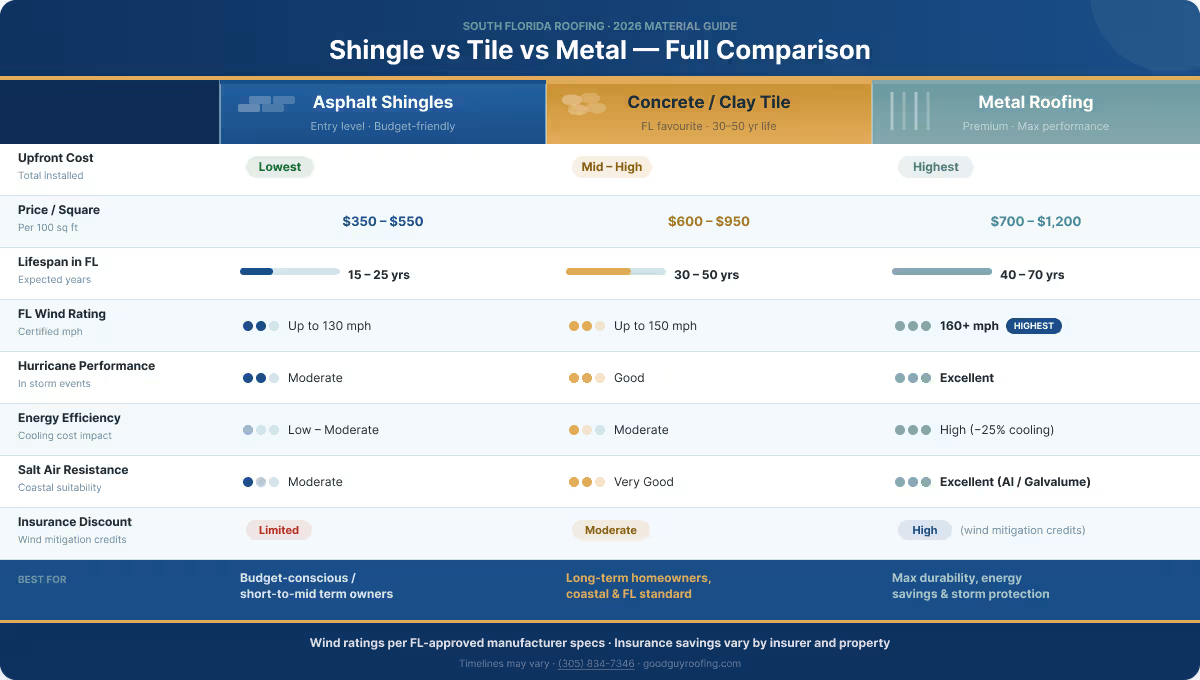
They’re thicker, have a more textured profile, and when installed with the correct Florida Product Approved underlayment, they can achieve wind resistance ratings of up to 130 mph, sufficient for most named storms, though at the lower end of hurricane protection available to Florida homeowners.
How They Perform in Florida Conditions
The core limitation of asphalt shingles in Florida is UV degradation. The granules embedded in the shingle surface protect the underlying asphalt mat from sun damage, but Florida’s intensity accelerates that wear. Granule loss, which shows up as sandy buildup in your gutters, signals that the protective layer is thinning. Once it’s gone, the asphalt beneath becomes brittle, cracks, and loses its waterproofing properties.
In terms of heat resistance, shingles can struggle. Dark-colored shingles absorb significant heat, which transfers into the attic and increases cooling costs. Light-coloured or “cool roof” shingles with reflective granule coatings are increasingly available and can reduce this impact, but they still don’t approach the reflective performance of metal roofing.
On the positive side, shingles are easy and relatively inexpensive to repair after storm events. Individual damaged sections can be replaced without disturbing the entire roof, which makes post-storm remediation quicker and less expensive.
| Advantages | Considerations |
| + Lowest upfront cost of the three options | – Shorter lifespan in Florida’s UV environment vs. other climates |
| + Widely available, most contractors are experienced with installation | – Lower wind resistance ceiling than tile or metal |
| + Easy and inexpensive to repair individual sections | – Less energy efficient, absorbs more heat into the attic |
| + Good colour variety, suits most architectural styles | – May not qualify for the highest wind mitigation insurance discounts |
| + Florida Product Approved options readily available | – Granule loss accelerated by Florida sun and heat |
| + Faster installation than tile or metal | – May require replacement within the homeownership horizon of longer-term owners |
| Who asphalt shingles make most sense for:
Homeowners on a tighter budget who need a functional, code-compliant roof now. Those who plan to sell within 8–12 years and want a fresh roof without the premium cost of tile or metal. Inland properties without significant hurricane exposure. Homes where weight is a structural concern, shingles are by far the lightest of the three materials. |
| Interested in shingle options? Request a quote for shingle roofing |
Concrete and Clay Tile: The South Florida Standard
Drive through virtually any established neighbourhood in Miami-Dade, Broward, or Palm Beach County and tile roofing dominates the landscape. This isn’t just aesthetic preference; tile has become the de facto roofing material for South Florida for well-grounded practical reasons.
It outlasts shingles by decades, handles Florida’s climate exceptionally well, and is genuinely resistant to the kinds of damage that claim other materials year after year.
There are two main variants: concrete tile, which is the more affordable and more common option, and clay tile, which offers superior durability, a richer aesthetic, and a price to match. Both operate on the same principle: the tile itself is inherently resistant to rot, fire, insect damage, and UV degradation in a way that organic or composite materials simply aren’t.
How Tile Performs in Florida Conditions
Tile roofing excels in the Florida climate in several ways. It is naturally resistant to UV radiation because it’s essentially a fired or cured inorganic material; the sun simply doesn’t degrade it the way it does asphalt. Tile also creates a natural airspace beneath each piece as it sits on the battens, which reduces heat transfer into the attic compared to directly adhered materials.
From a wind resistance standpoint, tile installed to current Florida Building Code requirements, with the required mortar bedding or foam adhesive at the eave and rake, and the specified mechanical fastening for field tiles, can achieve wind uplift ratings of up to 150 mph. After major hurricanes, properly installed tile roofs have consistently performed better than shingle roofs in equivalent wind speeds. The critical qualifier is “properly installed” , tile installed to older standards, or with inadequate fastening, can fail catastrophically.
Salt air resistance is another area where tile excels. The material itself is not affected by coastal salt exposure. Flashings and fasteners still require corrosion-resistant specification in coastal zones, but the tile surface will outlast virtually any other roofing material in a salt-air environment.
The main practical limitations are weight and cost. Tile roofing is heavy, typically 9 to 12 pounds per square foot, compared to 2 to 4 pounds for shingles.
Before installing tile on a home that previously had shingles, a structural assessment of the roof framing is required to confirm it can carry the load. Many homes built in South Florida after the 1970s were framed with tile loads in mind, but this should never be assumed.
Considering tile? Request a quote for tile roofing or call (305) 697-6372
| Advantages | Considerations |
| + Exceptional lifespan , 30 to 50+ years in Florida conditions | – Higher upfront cost than shingles |
| + Outstanding UV and salt air resistance | – Heavy, structural assessment required if replacing shingles with tile |
| + Strong wind uplift performance when installed to FBC standards | – Individual broken tiles can be difficult to match if discontinued |
| + Natural ventilation gap reduces attic heat transfer | – Installation requires specialist skill , not all roofers are equally qualified |
| + Fire resistant , non-combustible material | – Underlayment may need replacement before the tile itself wears out |
| + Qualifies for significant wind mitigation insurance discounts | – Longer installation timeline than shingles |
| + Low maintenance once properly installed |
| Who tile roofing makes most sense for:
Long-term homeowners who plan to stay in the property for 15 years or more and want a roof that’s unlikely to need replacing during that period. Coastal properties where salt air resistance matters. Homeowners seeking the highest wind mitigation insurance discounts. Those whose existing home already has tile, where matching aesthetics and structural framing are already in place. |
Metal Roofing
Metal roofing has grown significantly in popularity across South Florida over the past decade, and the reasons are straightforward for anyone who studies the data. It’s not just a style choice; metal outperforms other materials across nearly every metric that matters in the Florida climate. The reason it hasn’t entirely displaced tile and shingles comes down to one thing: upfront cost.
The most commonly installed residential metal roofing system in South Florida is standing seam metal, a system where concealed fastener panels interlock along raised seams, creating a weathertight surface with no exposed fastener penetrations. This matters in Florida because exposed fasteners are a point of long-term vulnerability in any roofing system. Standing seam eliminates that vulnerability entirely.
Other metal options include metal shingles and metal tile profiles, which replicate the look of traditional materials while delivering the performance of metal. These tend to be moderately priced between standing seam and entry-level shingles.
How Metal Performs in Florida Conditions
Metal’s performance in wind events is exceptional. Quality standing seam systems installed to current Florida Building Code specifications regularly achieve wind uplift ratings exceeding 160 mph, the highest category of residential roofing performance available. This is relevant in a state where Category 4 hurricanes occasionally make landfall. According to the Insurance Institute for Business & Home Safety (IBHS), metal roofing consistently demonstrates superior performance in extreme wind events compared to all other residential roofing materials.
The energy efficiency story is equally compelling. ENERGY STAR-rated metal roofing with factory-applied reflective coatings can reduce cooling costs by up to 25%, according to the Oak Ridge National Laboratory. In South Florida, where air conditioning accounts for a disproportionate share of household energy consumption, that figure translates to real and ongoing annual savings.
In coastal environments, material selection matters. Galvalume steel and aluminum are the preferred metals for coastal Florida applications; aluminum, in particular, has excellent inherent salt air resistance. A contractor who specifies the right alloy and coating system will deliver a roof that performs well in coastal conditions for decades. A contractor who installs the wrong metal in a coastal zone will leave you with a corrosion problem within a few years.
One common concern homeowners raise is noise during rain events. In a properly installed metal roofing system, with solid decking beneath, the sound difference compared to other roofing materials is minimal and often unnoticeable. The loud rain noise associated with metal roofing is a characteristic of older agricultural buildings with no insulation or decking, not modern residential installations.
| Advantages | Considerations |
| + Highest wind resistance rating of any residential roofing material | – Highest upfront cost of the three options |
| + Longest lifespan, 40 to 70 years in Florida conditions | – Fewer experienced installers, quality of installation varies significantly |
| + Superior energy efficiency, reflective coatings reduce cooling costs | – Expansion and contraction can cause noise if not properly installed |
| + Lightest of the three options, no structural loading concerns | – Material selection is critical in coastal zones; the wrong alloy corrodes |
| + Very low maintenance over its lifespan | – Hail impact can dent softer aluminium profiles |
| + Qualifies for the highest-tier wind mitigation insurance discounts | – Some HOA restrictions on appearance in traditional neighbourhoods |
| + Excellent salt air resistance (aluminium / Galvalume) | |
| + No exposed fasteners in the standing seam, eliminating a key failure point |
| Who does metal roofing make most sense for?
Homeowners who plan to stay long-term and want the last roof they’ll ever need to install. Coastal properties where maximum storm protection and salt resistance are priorities. Those seeking maximum insurance savings through wind mitigation credits. Anyone prioritising energy efficiency and lowest cost of ownership over a 30+ year horizon. |
Interested in metal roofing? Request a quote for metal roofing
Frequently Asked Questions
What roof lasts longest in Florida?
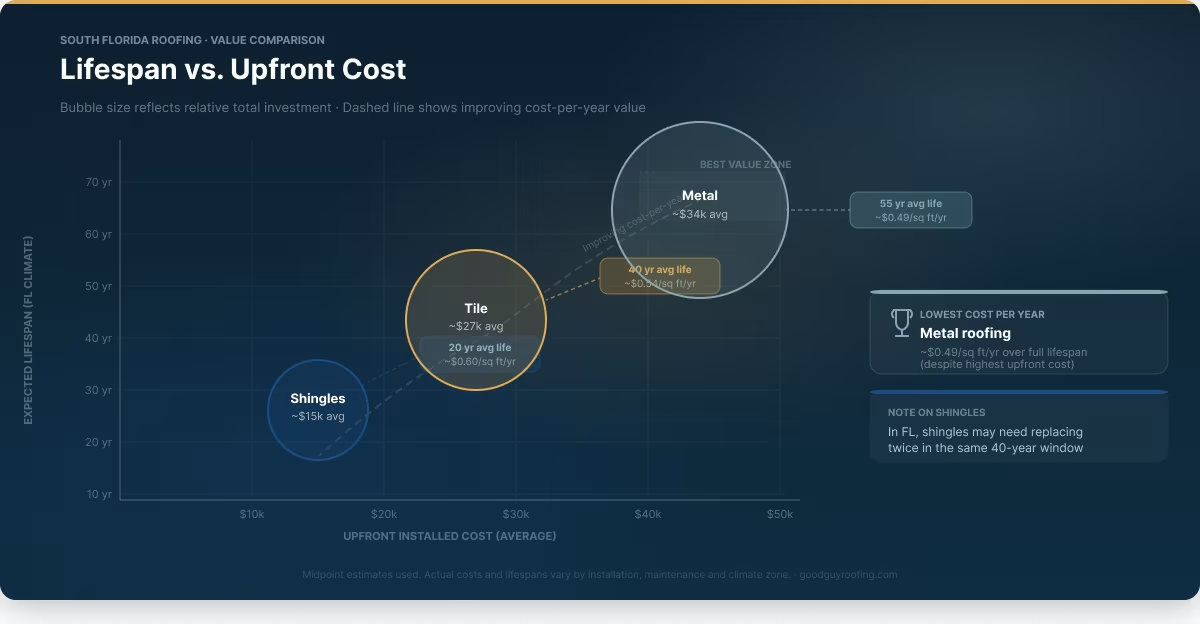
Metal roofing offers the longest lifespan of any residential roofing material in Florida, typically 40 to 70 years. Quality standing seam aluminium or Galvalume systems with appropriate coatings are particularly well-suited to Florida’s UV intensity and coastal salt air. Clay tile is a close second, with lifespans of 50 years or more when properly maintained , and the tile itself often outlasts the underlayment beneath it. Concrete tile typically lasts 30 to 50 years. Asphalt shingles, while functional and widely used, have the shortest effective lifespan in Florida’s climate at 15 to 25 years.
Is a metal roof worth it in coastal areas of Florida?
For most coastal homeowners, yes, with important caveats about material specification. Metal roofing in coastal Florida should use aluminium or Galvalume steel, not plain galvanised steel, which corrodes in salt air environments. When the right materials are specified and the system is installed correctly, metal roofing performs exceptionally well on coastal properties. It offers the highest wind resistance ratings available, superior salt air resistance, and the energy efficiency benefits from reflective coatings. The insurance savings through wind mitigation credits also tend to be highest with metal systems, which, over time, can offset a meaningful portion of the higher upfront cost.
Are tile roofs good for hurricanes?
Yes, when installed to the current Florida Building Code standards. Tile roofing installed with the appropriate mortar or foam adhesive bedding and specified mechanical fastening can achieve wind uplift ratings of up to 150 mph. Post-storm assessments consistently show that properly installed tile roofs outperform shingle roofs in equivalent wind events. The critical word is “properly” , tile installed to pre-2002 standards in Miami-Dade County, or to standards predating the post-Andrew code reforms, may not perform at those ratings. If your tile roof was installed before these reforms and has not been assessed, a wind mitigation inspection is worth scheduling.
Which roofing material is the most affordable?
Asphalt shingles have the lowest upfront cost, typically $12,000 to $18,000 installed for an average South Florida home. Tile runs $20,000 to $35,000, and metal starts around $24,000 and can reach $45,000 or more for premium systems on larger or more complex rooflines. However, “most affordable” depends on how you calculate it. Over a 40-year period, asphalt shingles may need to be replaced twice, while a metal roof installed once could still be performing. On a cost-per-year basis, metal often competes favourably with shingles despite the higher initial investment, particularly when insurance savings from wind mitigation credits are factored in.
Can I switch from tile to shingle (or vice versa)?
Yes, switching is possible in both directions, but both require careful consideration. Switching from tile to shingles is structurally straightforward since shingles are lighter, but carries aesthetic and HOA implications. Switching from shingles to tile is structurally more complex; tile is 3 to 5 times heavier, and the existing roof framing needs a structural assessment to confirm it can carry the additional load before any work begins. Skipping that assessment is a serious risk. Switching to metal is generally the easiest conversion from a weight standpoint. Regardless of which direction you’re moving, a building permit is required in Florida for any material change, and a licensed contractor should assess the specific feasibility for your home.
There Is No Single “Best”, But There Is a Right Answer for Your Home
Asphalt shingles, tile, and metal all have a legitimate place in South Florida roofing. What changes the equation is the specific circumstances of your home, your budget, your timeline, and your priorities. A good roofing contractor doesn’t push one material over another; they assess your situation honestly and help you make the decision that serves you best over the long term.
At Good Guy Roofing, we install all three materials across Palm Beach County, Broward County, and Miami-Dade County. We’re happy to walk you through the real-world trade-offs for your specific property, not a sales pitch, just an honest professional assessment.
If you’re researching a roof replacement and want a grounded, no-pressure opinion on which direction makes the most sense for your home, the best next step is a conversation with a licensed local roofer who knows the South Florida market.